
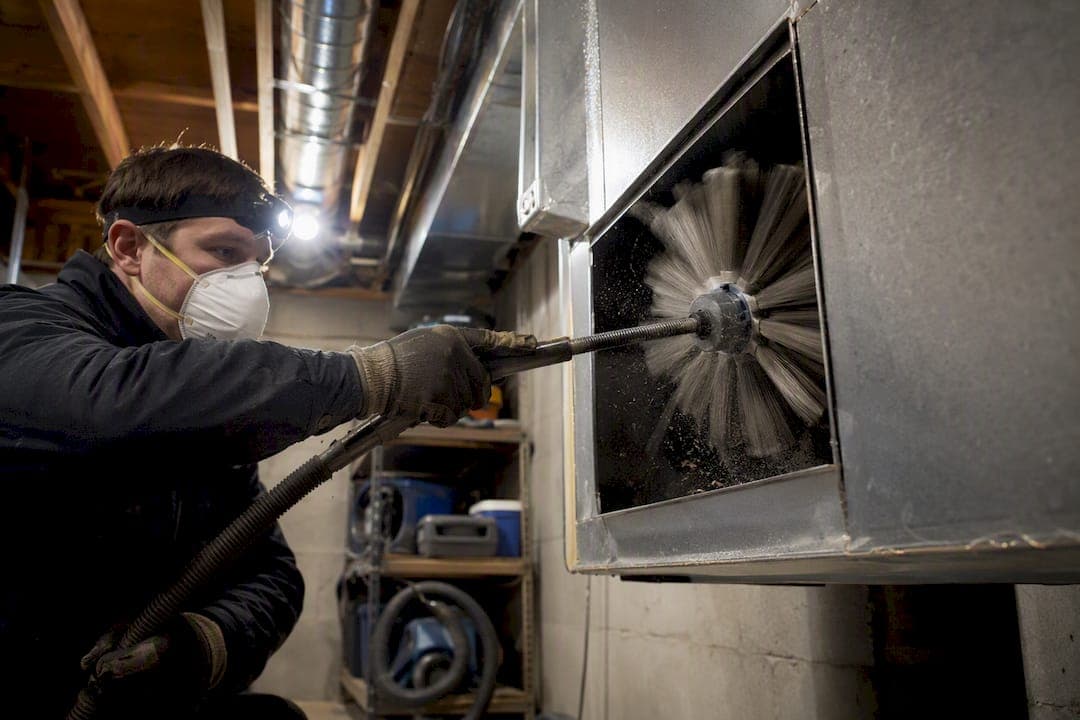
Professional duct, dryer vent, and wall AC cleaning restores airflow, cuts dryer fire risk, and improves the ventilation quality your home or building runs on day to day. Clean Vents technicians hold INCV certification, the credential from the Institut des Nettoyeurs de Conduits de Ventilation, and follow methods field-tested against AIVC and NADCA research.
Results vary by system. The EPA is blunt about this: cleaning helps contaminated systems but isn't a routine fix for every home, and a nine-home field study backs that nuance up with real numbers.
If any of these apply to your place, book an inspection or airflow test now:
- Dryer loads take noticeably longer to dry than they used to.
- You see lint, dust clumps, or debris around vents and registers.
- A musty smell lingers near supply vents or the wall AC unit.
- Airflow feels weak or uneven from room to room.
Key Takeaways
Professional duct, dryer vent, and wall AC cleaning restores measurable airflow and cuts fire risk, but it works best as a targeted fix, not a blanket indoor air quality guarantee.
| Point | Details |
|---|---|
| Airflow improves, particles vary | Mechanical duct cleaning often raises supply air rates but doesn't always reduce indoor particle counts. |
| Dryer vents are a safety priority | Lint buildup is a leading dryer fire factor, so treat vent checks as urgent, not optional. |
| Watch for visible signs | Longer drying times, musty smells, and visible debris signal it's time to call a professional. |
| Verify the work | Ask for before-and-after photos and an airflow check, not just a visual "it's done." |
| Clean Vents delivers certified service | INCV-certified technicians provide flat-rate pricing, airflow verification, and a satisfaction guarantee on every job. |
Table of Contents
- What "ventilation quality" means in this guide
- Does duct and vent cleaning actually improve air quality?
- What does a professional cleaning actually involve?
- When should you actually hire a professional?
- What happens during a service visit, step by step?
- How much does it cost and how long does it take?
- Why Clean Vents technicians handle this differently
- What the industry gets wrong about duct cleaning
- Ready to get your airflow checked?
- Sources
- FAQ
What "ventilation quality" means in this guide
This article uses "ventilation quality" to mean something specific: how well your existing air duct, dryer vent, and wall-mounted AC system move air once dust, lint, and debris have been professionally removed. It is not about building codes, ASHRAE ventilation standards, or regulatory airflow minimums. Those are legal design requirements, a different subject entirely.
What's covered instead is service-driven restoration:
- Mechanical air duct cleaning to remove built-up dust and debris.
- Dryer vent cleaning to clear lint and restore safe exhaust airflow.
- Wall AC deep cleaning to service coils, condensate trays, and filters.
For a homeowner, this maps directly to daily concerns: fewer allergy triggers, a dryer that doesn't overheat, an AC unit that actually cools, and lower energy bills from a system that isn't fighting blocked airflow.
Does duct and vent cleaning actually improve air quality?
The evidence is more nuanced than most marketing suggests, and that's worth knowing before you book anything. A nine-home field study using NADCA-style mechanical cleaning methods found that cleaning reliably strips adhered dust off duct surfaces and often raises supply air rates. In several homes, airflow increased by a noticeable margin, often significantly improving supply air rates. What it didn't show was a consistent drop in indoor particle or bioaerosol counts. Indoor air quality depends on outdoor pollution, other household sources, and ventilation habits, not duct cleanliness alone.
"Duct cleaning has not been shown to prevent health problems," according to the EPA, which also warns that cleaning done poorly can stir up contaminants and make indoor air worse, not better.
Dryer vents sit on firmer ground. NADCA presentation materials identify lint buildup as a leading factor in dryer fires and recommend professional inspection with airflow verification, not just a quick lint trap clean.
The practical takeaway: professional cleaning is targeted source management. It fixes airflow and lint hazards with real, measurable results. It is not a blanket cure for every indoor air complaint, and no honest technician will promise otherwise.
What does a professional cleaning actually involve?
Legitimate service work looks different from a homeowner running a shop vac over a vent cover. Here's what each service actually requires:
- Air duct cleaning: technicians agitate debris loose from duct walls, then pull it out with high-power vacuums under negative-pressure containment, so dust doesn't escape into your living space. Registers, grilles, and coil surfaces get inspected and cleaned as part of the same visit.
- Dryer vent cleaning: this covers the full run, from the connector behind the dryer to the exterior termination point, not just the accessible section. Technicians remove lint nests, check the outside vent flap for obstruction, and confirm exhaust airflow is unobstructed end to end. This same logic applies whether the vent runs a straight ten feet or terminates through a roof with multiple bends.
- Wall-mounted AC deep cleaning: beyond a filter swap, this means cleaning evaporator coils and condensate trays where moisture and dirt collect, which can reduce cooling efficiency and promote microbial growth if neglected.
Pro Tip: If a cleaning company shows up with just a household vacuum and no containment setup, that's a red flag. Low-power, uncontained cleaning can push contaminants into the air instead of removing them.
When should you actually hire a professional?
Not every system needs cleaning on a fixed schedule, and paying for one when there's nothing wrong isn't a great use of your budget. Watch for these signals instead.
- Dryer cycles taking noticeably longer than they used to, a classic sign of restricted exhaust airflow.
- Visible lint or debris around vent covers, registers, or the dryer vent hood outside.
- A musty or stale odour near supply vents, which can point to moisture or contamination inside the ductwork.
- Recent renovation work that kicked drywall dust or insulation fibres into the system.
- Evidence of pests, nesting material, or droppings near vents.
- Rooms with noticeably weaker airflow than others on the same system.
Treat mould evidence, heavy post-renovation contamination, or a suspicious dryer vent as priority calls, not something to schedule around. As a general cadence, plan on an annual dryer vent check for safety, and let duct or AC cleaning follow the signs above rather than the calendar.
What happens during a service visit, step by step?
A proper visit starts before the truck even shows up. Technicians confirm scope and pricing upfront, then walk through what access points or minor repairs might be needed, like removing a register or clearing furniture from a vent.
- Inspection and setup: the technician reviews the system, confirms the agreed scope, and sets up containment or access panels as needed.
- Cleaning: this includes agitation to dislodge debris, high-power vacuuming under negative pressure, and cleaning of individual components like coils, condensate trays, or vent connectors.
- Exterior and termination checks: for dryer vents specifically, this means confirming the outside cap opens freely and airflow is strong at the termination point, not just clean inside the wall.
- Verification and wrap-up: reputable companies document the job with before-and-after photos and note airflow results, since flow-rate checks and photo documentation are the practical, job-level verification most companies rely on, rather than lab-grade dust sampling.
A satisfaction guarantee backing the work matters here too. It gives you recourse if the airflow test after the job doesn't show real improvement.
How much does it cost and how long does it take?
Price depends less on the type of service and more on the specifics of your system.
- System size and number of vents or registers drive most of the price difference between a small apartment and a larger home.
- Access difficulty matters. Ducts buried behind finished ceilings or a dryer vent with multiple bends both take longer to service properly.
- Visible contamination or needed repairs, like a crushed vent section, add to scope and cost.
A standalone dryer vent cleaning is often a short visit, sometimes under an hour for a straightforward run. A full duct system paired with wall AC service can run several hours on-site. When comparing quotes, favour flat-rate pricing that states what's included, and treat a suspiciously low bid with no mention of verification or containment as a warning sign, not a bargain.
Why Clean Vents technicians handle this differently
Clean Vents technicians carry INCV certification, the recognized credential in this trade, and bring hands-on experience with air duct, dryer vent, and wall AC systems across residential and commercial properties. Every job comes with upfront flat-rate pricing and a satisfaction guarantee, so the scope is settled before work starts, not renegotiated halfway through.
- INCV-certified technicians on every job.
- Transparent, flat-rate quotes with no surprise add-ons.
- Airflow checks and before/after photos as standard verification.
- Satisfaction guarantee backing the completed work.
Readers wanting more detail on how debris affects system performance can review Clean Vents' breakdown of how duct debris blocks airflow and the related guide on inspecting ductwork to cut energy costs.
Pro Tip: Ask any company for their verification method before booking. If they can't describe how they confirm the job worked, they probably aren't checking.
What the industry gets wrong about duct cleaning
Most guidance on this topic swings between two extremes: cleaning-industry marketing that implies every duct system is a health hazard waiting to happen, and skeptics who dismiss cleaning entirely because the EPA hasn't blessed it as a universal health fix. Neither view holds up well against the actual field data.
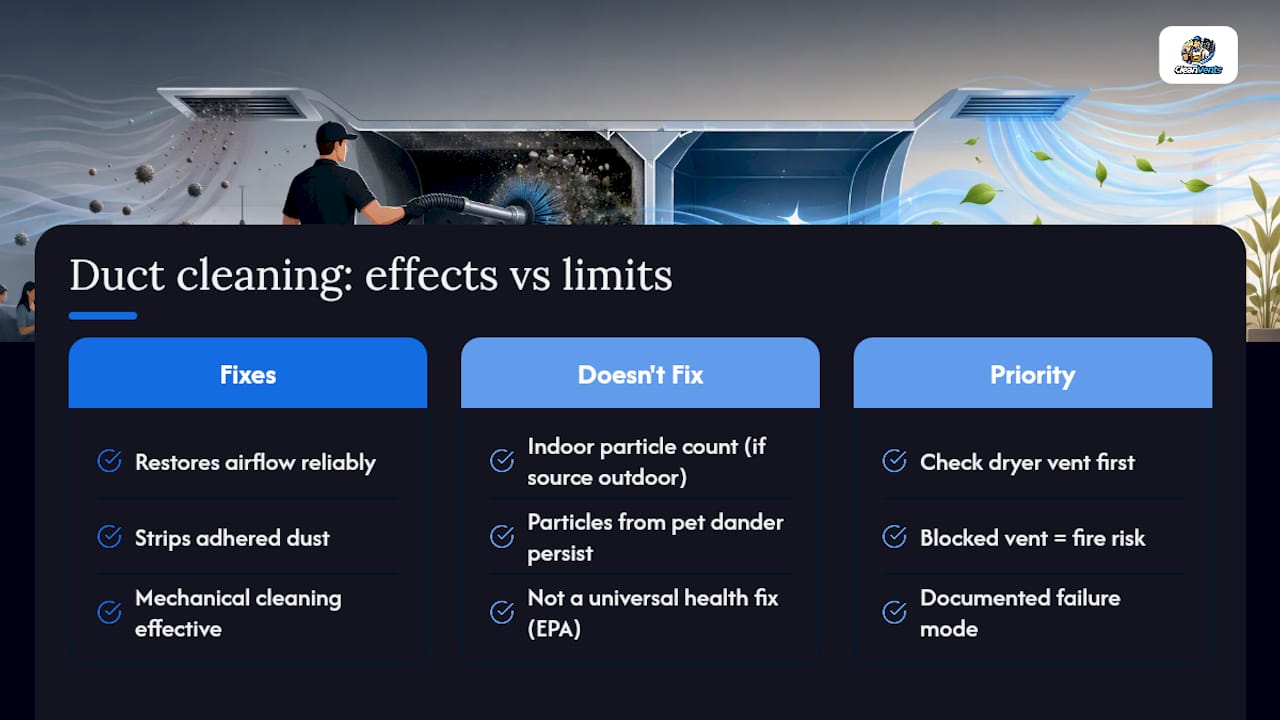
The nine-home study makes the honest case: mechanical cleaning reliably restores airflow and strips adhered dust, but it won't necessarily drop your indoor particle count if the real source is outdoor pollution or pet dander circulating through the house. That's not a failure of the service. It's a mismatch between what cleaning fixes and what some customers expect it to fix.
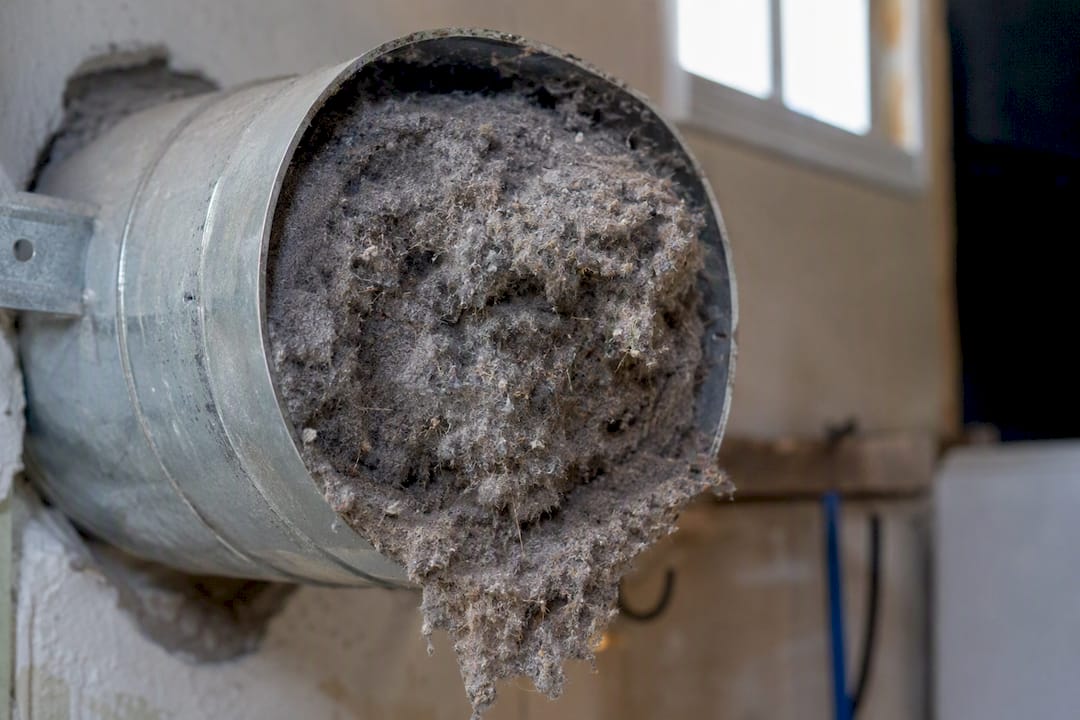
Where the conventional advice really falls short is on dryer vents. They get treated as an afterthought next to duct cleaning, when the fire risk data argues the opposite priority. A blocked dryer vent is a safety issue with a documented failure mode, not a comfort upgrade.
If you take one thing from this guide, prioritize the dryer vent check first, then let visible signs, not a fixed schedule, decide when your ducts or wall AC unit need attention.
Ready to get your airflow checked?
If you're dealing with longer dryer cycles, a musty smell near the vents, or a wall AC unit that won't cool like it used to, Clean Vents gets you a clear answer with an inspection and upfront flat-rate pricing, no vague estimate that changes once the truck arrives.

Every job comes with INCV-certified technicians, documented before-and-after verification, and a satisfaction guarantee, so you know exactly what you're paying for before work starts.
Start with the air duct cleaning service page to see what's included, or go straight to the dryer vent cleaning service if fire risk and drying time are your main concern. For wall-mounted units, the AC cleaning service page covers coil and condensate service. Request a quote today and get a technician out to inspect the system before small problems turn into bigger repairs.
Sources
- Should You Have the Air Ducts in Your Home Cleaned? | US EPA
- AIVC field study on mechanical air duct cleaning (NADCA methods)
- Dryer vent cleaning (NADCA presentation)
Clean Vents' own blog covers company-specific guidance in more depth, including how to inspect ductwork and what air duct debris does to airflow.
FAQ
Does duct cleaning improve indoor air quality?
It reliably improves airflow and removes surface dust, but a nine-home field study found mixed effects on indoor particle counts, since outdoor air and other household sources matter too.
How often should dryer vents be cleaned?
An annual check is a reasonable baseline for most households, with earlier cleaning if drying times increase or lint appears around the vent hood.
Can I clean air ducts myself with a regular vacuum?
Standard household vacuums lack the suction and containment professionals use, and uncontained cleaning can push dust into your living space instead of removing it.
What certifications should a duct cleaning company have?
Look for INCV certification, the recognized standard referenced by Clean Vents, along with technicians experienced in NADCA-style mechanical cleaning methods.
How do I know the cleaning actually worked?
Ask for before-and-after photos and an airflow check at the vent or register, the same job-level verification steps professionals use instead of lab dust sampling.