
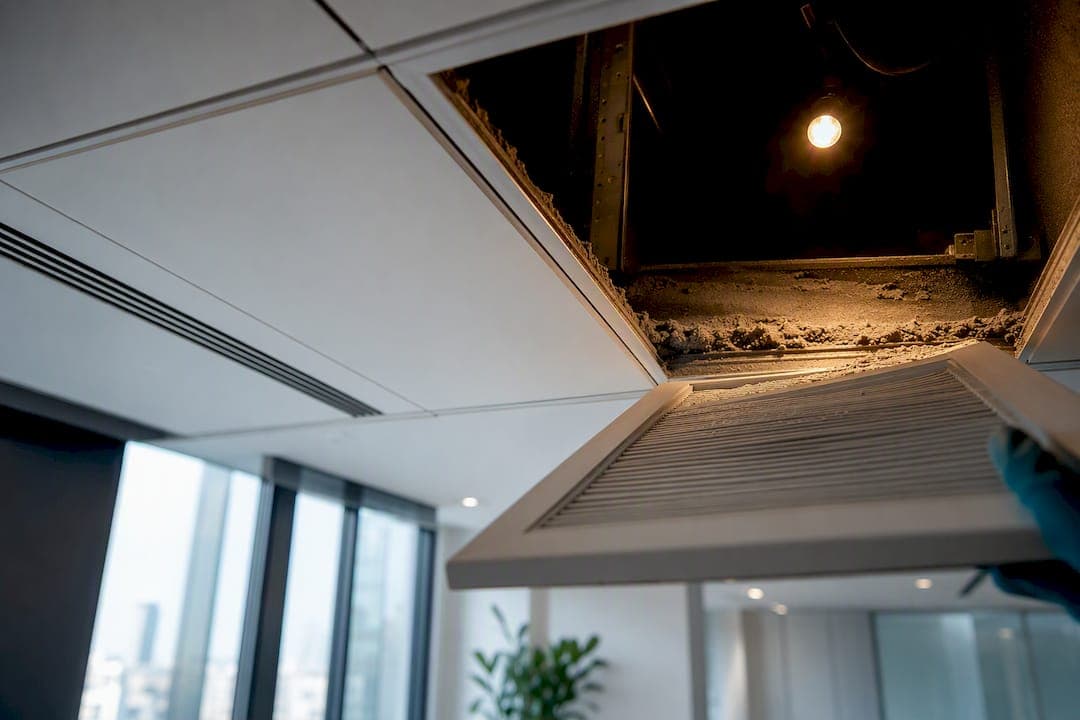
Yes, if your renovation opened up ceilings, cut drywall, or ran ductwork with the system exposed, schedule a duct inspection before anyone moves back in. Post-renovation cleaning is remedial work, not the routine service some companies push year after year, and it's warranted whenever you see dust at the vents, smell construction odours, or notice weak airflow. Start with a quick visual check of registers and the air handler. If contaminants are visible, book a professional inspection covering the ducts, coils, and blower, guided by inspection-based standards like NADCA/ACR.
TL;DR:
- A duct inspection is essential after renovations involving drywall sanding, cutting, or exposed ductwork before occupants return to prevent dust redistribution.
- Construction dust can coat coils and blower components, reducing efficiency and increasing energy costs, and is often unnoticed without a thorough cleaning.
- A complete post-renovation cleaning includes supply and return ductwork, diffusers, the air handler, rooftop units, and follows NADCA standards with documented verification.
- Signs of contamination, such as visible dust at vents or persistent odors, should prompt immediate inspection and cleaning before complaints arise.
- Hiring qualified contractors requires a detailed scope, certifications, proof of containment procedures, and avoiding low-bid, unverified offers to ensure effective remediation.
Table of Contents
- Why renovation dust gets into your HVAC system
- What a proper post-renovation cleaning job actually covers
- When to schedule cleaning and the warning signs to watch
- How professionals clean ducts and protect occupants
- How to pick a contractor for post-renovation duct work
- What we're seeing on job sites right now
- How Clean Vents handles post-renovation duct cleaning
- Sources
- FAQ
Why renovation dust gets into your HVAC system
Sanding drywall, cutting studs, and tearing out old ceiling tile throws fine particulate into the air, and if the return grilles weren't sealed off, that dust gets pulled straight into the plenum. Once it's in there, it settles across coil fins, blower wheels, and duct interiors, waiting for the first blast of airflow to redistribute it through every room the system serves.
This is why so many offices smell "off" for weeks after a renovation wraps, even after the dumpsters are gone. A 2010 review of the scientific evidence found that routine duct cleaning alone doesn't reliably improve indoor air quality or system efficiency. But that same review backs remedial cleaning after events like construction, because the contamination pathway is different and the debris load is measurably higher.
What renovation dust typically does to a building:
- Coats coil surfaces, which reduces heat transfer and pushes energy costs up
- Settles in supply runs and gets kicked loose every time the fan cycles
- Creates visible grey deposits around diffusers and grilles within days of occupancy
- Traps odours from adhesives, paint, and sealants inside duct liners
None of that shows up on a walkthrough until the system runs long enough to blow it back out.
What a proper post-renovation cleaning job actually covers
A cleaning that only touches the visible duct runs and skips the mechanical room misses most of the contamination. Construction dust settles wherever airflow is slowest, and that's usually the coil face and the blower housing, not the straight run of ductwork everyone can see.
A complete scope should include:
- Supply and return ductwork, including flexible runs, plenums, and any sections opened during construction
- Diffusers and grilles, which trap the heaviest visible buildup and are the fastest way to spot a problem
- The air handler, specifically the coils, blower wheel, and drain pan, where reduced airflow and mould risk both start
- Rooftop units and VAV boxes, often skipped because they're harder to access, but just as exposed during a reno
- Photo documentation and a closeout report, with before-and-after images and next-step recommendations like a filter change or coil service
The preferred method follows NADCA-style source removal: mechanical agitation paired with continuous HEPA-filtered negative pressure, so loosened debris gets pulled out of the building instead of pushed further into it.
Pro Tip: Ask any contractor for a written scope naming every component they'll touch before you sign anything. If the air handler isn't listed by name, coils included, assume it's not part of the job.
When to schedule cleaning and the warning signs to watch
Any renovation that involved demolition, drywall sanding, or leaving return grilles uncovered is an automatic trigger. Schedule an inspection at project closeout, before staff move back into the space, not after complaints start rolling in.
Watch for these signs in the days after construction wraps:
- Dust visibly puffing out of vents when the system starts up
- Grey or white residue collecting around diffusers within the first week
- A lingering construction smell, sawdust, adhesive, or paint, that filters don't clear
- Uneven temperatures between rooms that weren't a problem before the reno
- A cluster of occupant complaints about stuffiness or irritation in the same zone
If any of these show up, don't wait for the next scheduled maintenance window. The best timing is usually a system shutdown, or phased night and weekend work, so nobody's breathing disturbed dust while the office is occupied.
How professionals clean ducts and protect occupants
A commercial job worth paying for starts before anyone touches a duct. The crew maps the system, checks access points, and grades contamination severity so the proposal matches what's actually in the ductwork, not a guess.
The process generally runs in this order:
- Pre-inspection and mapping of every affected run, plus a written scope based on what's found
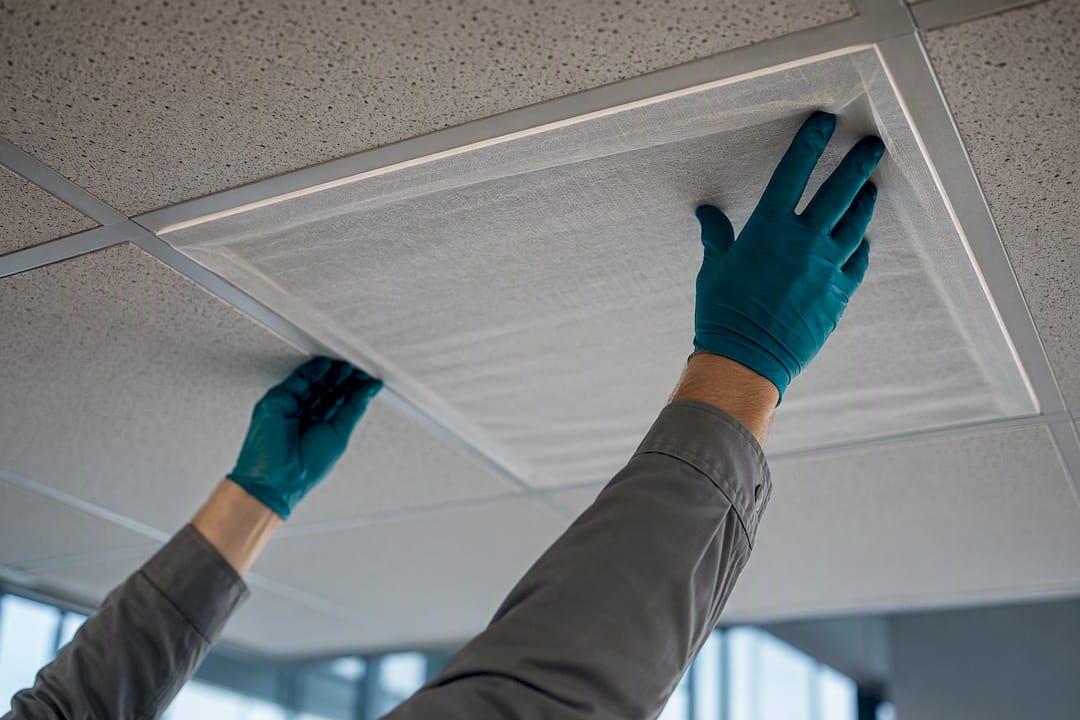
- Containment setup, sealing registers, placing physical barriers, and staging HEPA negative-air machines so extraction happens continuously
- Agitation and source removal through the ducts, followed by coil, blower wheel, and drain pan cleaning at the air handler
- Camera or visual verification to confirm the contamination is actually gone, not just disturbed
- Filter replacement and a final start-up check, with photo-documented hand-back so the facility team has proof of what was done
Containment and continuous HEPA extraction are what separate a job that leaves the building cleaner from one that just moves dust from the ducts into the office air. For occupants with respiratory sensitivities, notify them ahead of scheduled work and place temporary filter media at diffusers during recommissioning, on top of the DOHS guidance on avoiding biocides on certain duct materials.
How to pick a contractor for post-renovation duct work
The contractor you hire should be able to name every component they'll clean before they ever touch a tool. If a quote arrives without a site visit, walk away, because contamination severity varies too much between offices to price blind.
Look for these trust signals before signing anything:
- A scope that names components, containment method, and deliverables, including photos and a written report
- Technicians certified to an inspection-based standard, such as NADCA/ACR, or an equivalent credential like INCV certification
- Documented proof of HEPA negative-pressure procedures, not just a mention of "HEPA filters" on a truck
- Liability insurance and a willingness to work nights or weekends around your occupancy schedule
Red flags are just as telling. A flat per-register fee with no inspection, a pitch for biocide fogging or "sanitization" as a stand-in for actual source removal, or refusal to provide hand-back documentation should all end the conversation. Consumer reporting on duct-cleaning services has flagged exactly these tactics for years, and they haven't gone away.
Pro Tip: Get the scope in writing before the crew shows up, not after. Verbal promises about "cleaning everything" evaporate the moment there's a dispute over what was actually done.
Preventing contamination in the first place is cheaper than remediating it. Sealing ducts and registers before demolition starts, a step covered in this post-renovation cleaning checklist, cuts down significantly on what ends up needing extraction later.
What we're seeing on job sites right now
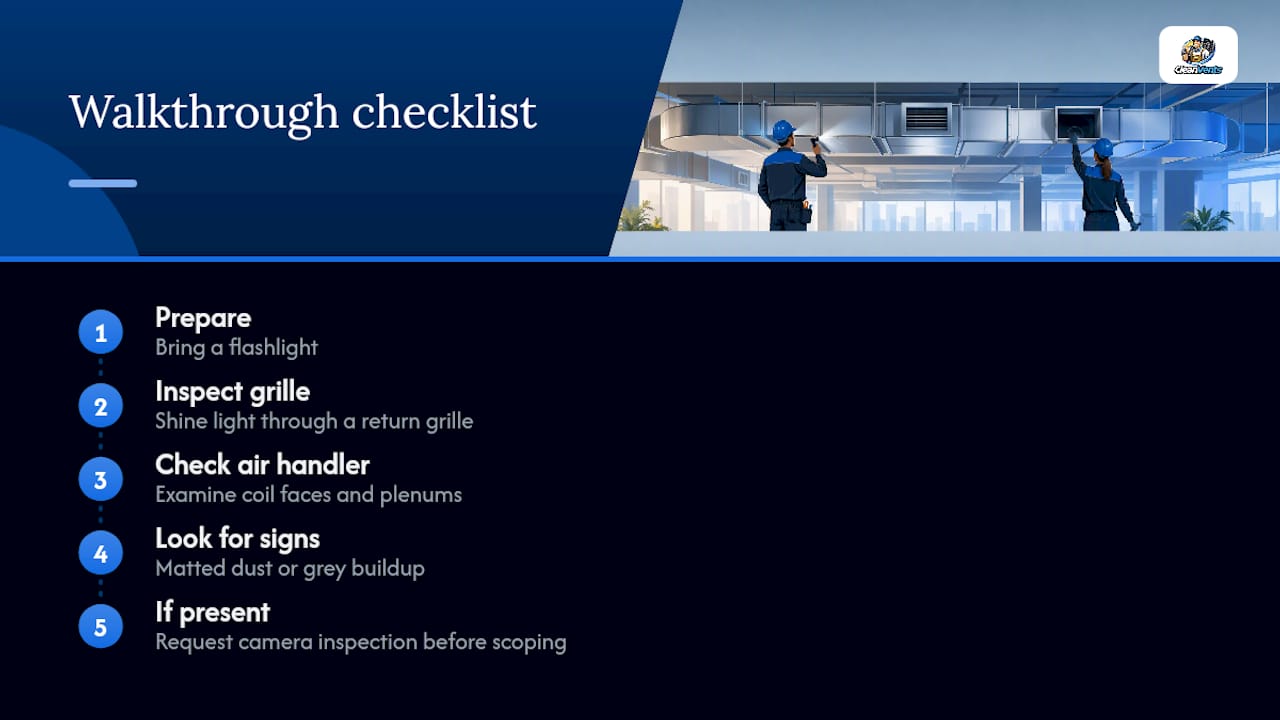
Drywall dust in plenums and fouled coil faces are the two findings we run into most often, and both quietly cut into system performance long before anyone notices a comfort problem. A coil coated in fine dust transfers heat poorly, which means longer run times and higher bills, even though nothing looks obviously wrong from the mechanical room floor.
Our advice for a walkthrough: bring a flashlight, shine it through a return grille, and look at the air handler while you're at it. If you see matted dust or grey buildup, that's your signal to request a camera inspection before deciding on scope.
— Clean Vents
How Clean Vents handles post-renovation duct cleaning
Clean Vents runs a service built specifically around remedial cleaning, not the flat-rate, per-vent gimmicks that skip the parts of your system doing the real work. Our bundle covers a full inspection, air handler cleaning (coils, blower wheel, drain pan), duct source removal, and a photo-documented closeout report you can hand to tenants, insurers, or your own facility file.
Every job runs with INCV-certified technicians, a flat-rate quote issued after we've actually seen the site, and scheduling flexibility for night or weekend work so your office doesn't sit disrupted during business hours. You get a documented hand-back, not just a verbal assurance that the job's done. If your renovation left dust at the diffusers or a lingering smell that filters aren't clearing, request a free site review and quote through Clean Vents' service page and get a scope built around what's actually in your system.
Sources
Core guidance behind this article includes EPA's duct cleaning recommendations, the 2010 scientific review, and the DOHS fact sheet. For contractor selection, see our guide on hiring a duct cleaning professional.
- Is ventilation duct cleaning useful? A review of the scientific evidence
- DOHS fact sheet on HVAC duct cleaning
- Commercial Air Duct Cleaning & HVAC | IAQ Restoration
FAQ
What time of year is best for duct cleaning?
For post-renovation work, timing follows the project, not the season. Schedule cleaning at project closeout, ideally during a system shutdown or off-hours window, rather than waiting for a specific time of year.
How do you clean commercial HVAC ducts?
Commercial crews use mechanical agitation combined with continuous HEPA-filtered negative pressure to pull debris out of the system, then clean the air handler's coils, blower wheel, and drain pan before verifying results with a camera inspection.
What are the downsides of duct cleaning?
Cleaning done without containment can redistribute dust into occupied space instead of removing it, and routine cleaning without a specific cause hasn't been shown to reliably improve air quality or energy performance, according to a 2010 review of the evidence.
How much should duct cleaning cost in Ontario?
Pricing varies too much by system size and contamination severity for a flat number to mean anything responsibly. Any quote offered without a site inspection first is a red flag, regardless of the number attached to it.
Does Clean Vents clean the air handler, not just the ducts?
Yes. Clean Vents' post-renovation service includes the coils, blower wheel, and drain pan alongside the duct runs, since air handler contamination affects airflow and efficiency as much as dust in the ducts themselves.