
Most mini splits that stop cooling are suffering from wrong settings or restricted airflow, not a mechanical failure. Manufacturer troubleshooting guides consistently rank mode errors, dirty filters, and blocked outdoor units as the top three causes, ahead of refrigerant and electrical faults. Before assuming the worst:
- Confirm the remote is set to Cool, not Fan or Dry
- Check the breaker and outdoor disconnect are on
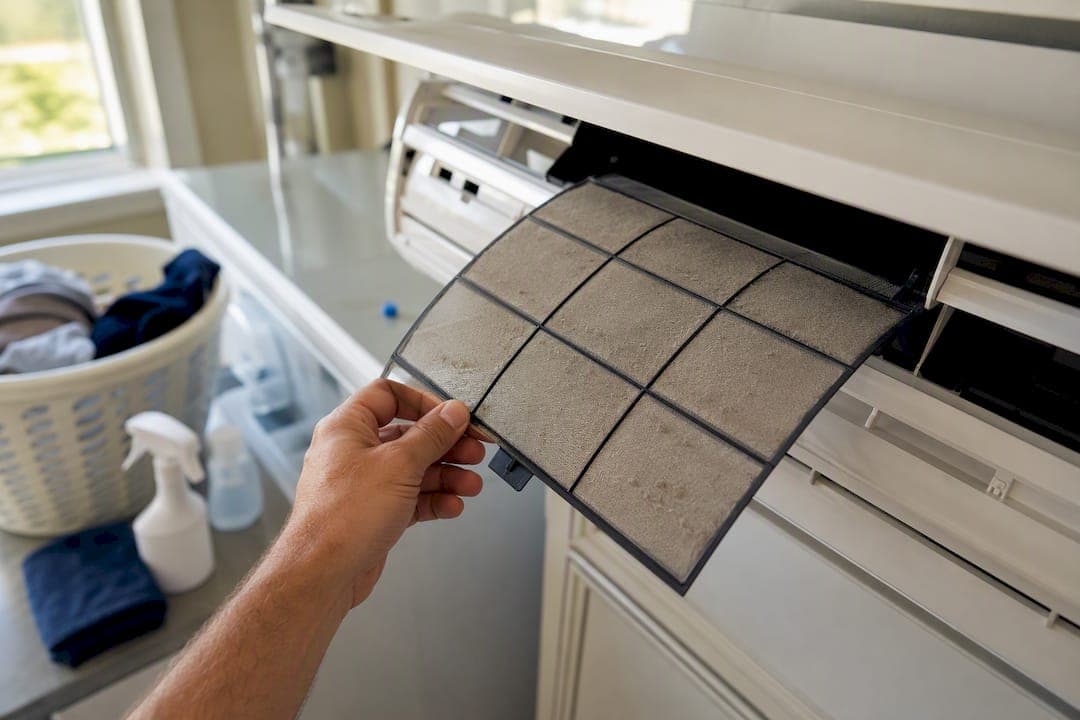
- Pull the indoor filter and check for dust buildup
Clean Vents, an INCV-certified duct and wall AC cleaning service, sees clogged filters behind a large share of "not cooling" service calls in Laval and the surrounding region.
Key Takeaways
Most mini splits stop cooling because of wrong settings, a dirty filter, or a blocked outdoor unit, and those are fixes any homeowner can try safely in minutes.
| Point | Details |
|---|---|
| Check settings first | Confirm Cool mode, working power, and a clean filter before assuming a mechanical failure. |
| Respect the restart delay | Wait roughly three minutes after power cycles before troubleshooting further. |
| Never handle refrigerant | Low charge means a leak, and only a certified technician can legally repair and recharge it. |
| Treat ice as a symptom | A frozen coil points to airflow or refrigerant problems, not the root cause itself. |
| Book annual maintenance | Professional cleaning once a year for cooling-only systems prevents most common failures. |
Table of Contents
- Five-minute checklist to try right now
- Why settings and power cause a false alarm
- How a dirty filter kills your mini split's cooling
- Outdoor unit blocked or fan not spinning
- Ice on the indoor coil: what it means and how to fix it
- Low refrigerant and why you can't fix it yourself
- Reading fault codes and blink patterns
- Clogged condensate drain and water leaks
- When to stop troubleshooting and call a technician
- What Clean Vents checks during a wall AC cleaning visit
- Could a faulty sensor be why it feels warm inside?
- Is your mini split just too small for the room?
- Does hot weather make my mini split work harder?
- When installation mistakes are the real culprit
- Author's take: fix the free stuff first
- Get ahead of it before summer hits
- Sources
- FAQ
Five-minute checklist to try right now
Run through these steps in order before you touch anything else:
- Set the mode to Cool and drop the temperature at least 5°C below the current room reading.
- Look outside. Is the condenser fan spinning? Check the breaker panel and any outdoor disconnect switch.
- Remove the indoor filter, rinse it, and let it air dry completely before reinstalling.
- Clear 18 to 24 inches of space around the outdoor unit and confirm nothing is blocking the fan blade.
- If you see ice on the indoor coil or lines, shut the system off and let it thaw fully. Do not run it while frosted.
Pro Tip: Wait a full 10 minutes after any power cycle or mode switch before deciding the unit "isn't working." Compressors often pause briefly before restarting.
Why settings and power cause a false alarm
A unit stuck on Fan mode blows air with no cooling at all, which many homeowners mistake for a broken compressor. Dry mode also feels different from Cool, since it prioritizes moisture removal over temperature drop. Check the remote display carefully, not just the vent.
Many models also have a built-in compressor restart delay, often around three minutes, that kicks in after any power interruption or mode change. That pause protects the compressor from short cycling and can look like a fault when it's actually normal behaviour.
- Confirm the breaker hasn't tripped
- Check any outdoor disconnect box near the condenser
- If the breaker trips again after resetting, stop. Repeated trips point to an electrical problem that needs a licensed technician, not another reset attempt.
How a dirty filter kills your mini split's cooling
Airflow across the indoor evaporator coil is what lets the system pull heat out of your room air. A filter clogged with dust and pet hair chokes that airflow, and the coil temperature drops low enough to start icing over instead of cooling properly. It's one of the simplest fixes and, according to Carrier's own repair guidance, one of the most common.
- Open the front panel of the indoor head and slide out the filter.
- Vacuum loose debris, then rinse under lukewarm water.
- Shake off excess water and let it air dry completely. Never reinstall a damp filter.
- Snap the panel back into place and run the unit for 20 to 30 minutes.
Pro Tip: Check the filter every two to four weeks if you have pets or run the system daily through summer. A filter that looks grey instead of white has already lost real airflow.
If cooling returns to normal within half an hour, the filter was your problem. If air still feels weak or warm after a clean filter and full mode/power check, the obstruction is likely further along the line, either at the outdoor unit or deeper in the refrigerant circuit.
Outdoor unit blocked or fan not spinning
The outdoor condenser is where your mini split actually dumps heat outside. Bury it in leaves, mulch, or snow, and the system can't reject heat no matter how clean your indoor filter is.
- Keep 18 to 24 inches clear on all sides of the condenser, more if it sits against a fence or hedge
- Watch the fan blade during a cooling cycle. A silent, motionless fan while the unit is calling for cooling usually means a fan motor or capacitor issue
- Rinse the outdoor coil gently with a garden hose from the inside out, never a pressure washer
- If the fan doesn't spin after clearing debris and confirming power, stop troubleshooting and book a technician
Snow and ice buildup around the base in winter operation is a separate issue from summer clearance problems, but the space requirement is the same either way.
Ice on the indoor coil: what it means and how to fix it
A layer of frost or solid ice on the indoor coil or copper lines is a symptom, not the diagnosis on its own. Running the unit while iced up just makes things worse and can damage the compressor.
- Power down immediately and switch the fan to Off, not just Cool
- Let the unit thaw completely, which can take several hours depending on how thick the ice is
- Once thawed and dry, restart on Cool and monitor closely
ServiceMag's troubleshooting research points to four recurring causes: restricted airflow from a dirty filter, low refrigerant charge, running the unit when outdoor temperatures fall below its rated cooling range, or a failing indoor fan motor that can't move enough air across the coil. If you cleaned the filter and cleared the outdoor unit and the coil freezes again within a day or two, don't keep cycling the system. Call a professional.
Low refrigerant and why you can't fix it yourself
Refrigerant doesn't get "used up" through normal operation. If your mini split is low on charge, it's leaking somewhere in the line set or coil, and that's a repair job for a certified technician, not a DIY project.
- Hissing or bubbling sounds near the line set or indoor unit
- Frost or ice forming on the refrigerant lines themselves, not just the coil
- Weak, lukewarm airflow that persists even after filters are clean and the outdoor unit is clear
FilterBuy's troubleshooting guide is blunt about this: refrigerant handling requires certification, both for safety and because it's regulated equipment. A technician will pressure test the system, locate the leak, repair it, then evacuate and recharge the line set to factory specification. Expect the visit to run longer than a routine filter check, since leak detection alone can take time depending on where the leak sits in the system.
Reading fault codes and blink patterns
When an indoor unit's LED blinks in a repeating pattern instead of staying solid, that's the system reporting a fault code. Before calling for service, gather what you can safely observe:
- Is the breaker holding, or has it tripped?
- Is the outdoor fan running or completely still?
- Any burning smell, unusual noise, or visible damage?
- Count the blinks and note the pause pattern between groups
ServiceMag's guide is worth checking because the same blink count means different faults across different brands, so match what you see against your unit's own service manual rather than a generic chart. Pro Tip: Take a short video of the blinking light on your phone. It's faster and more accurate than trying to describe the pattern over the phone to a dispatcher. If you smell burning or the breaker keeps tripping after a reset, shut the unit down and wait for a technician. Don't keep testing it.
Clogged condensate drain and water leaks
A blocked condensate drain line backs up water inside the indoor unit, which can trigger an automatic shutdown or start dripping onto your wall and floor. Left alone, standing water in the pan breeds mould and a musty smell that spreads through the room.
- Try a soft flush with a wet/dry vac at the outdoor drain outlet to pull the clog free
- Avoid forcing a rigid object up the line, since that can puncture the drain pan
- If leaks keep coming back after clearing the line, the coil or original installation may be the real issue. That calls for a professional assessment rather than repeated DIY fixes.
When to stop troubleshooting and call a technician
Some symptoms mean it's time to put the tools down. Call a certified HVAC technician right away if you notice a refrigerant leak (hissing, ice on the lines), any burning smell, a breaker that trips repeatedly, or a compressor that hums but never starts.
- A proper diagnostic visit includes pressure checks, electrical testing, leak detection, and sensor inspection
- Refrigerant work legally requires a certified technician, both for handling and disposal
- Coil cleaning and drain servicing are often bundled into the same visit if airflow or water issues are found
Most manufacturers, including Trane's own guidance, recommend a professional inspection at least once a year for cooling-only systems, twice a year if the unit also handles heating.
What Clean Vents checks during a wall AC cleaning visit
Clean Vents technicians are INCV certified and work across Laval, Rosemère, Boisbriand, Blainville, Lorraine, Bois-des-Filion, and Sainte-Thérèse with upfront flat-rate pricing and a satisfaction guarantee. A wall AC cleaning visit targets exactly the buildup that causes many of the cooling complaints covered above.
A typical visit includes:
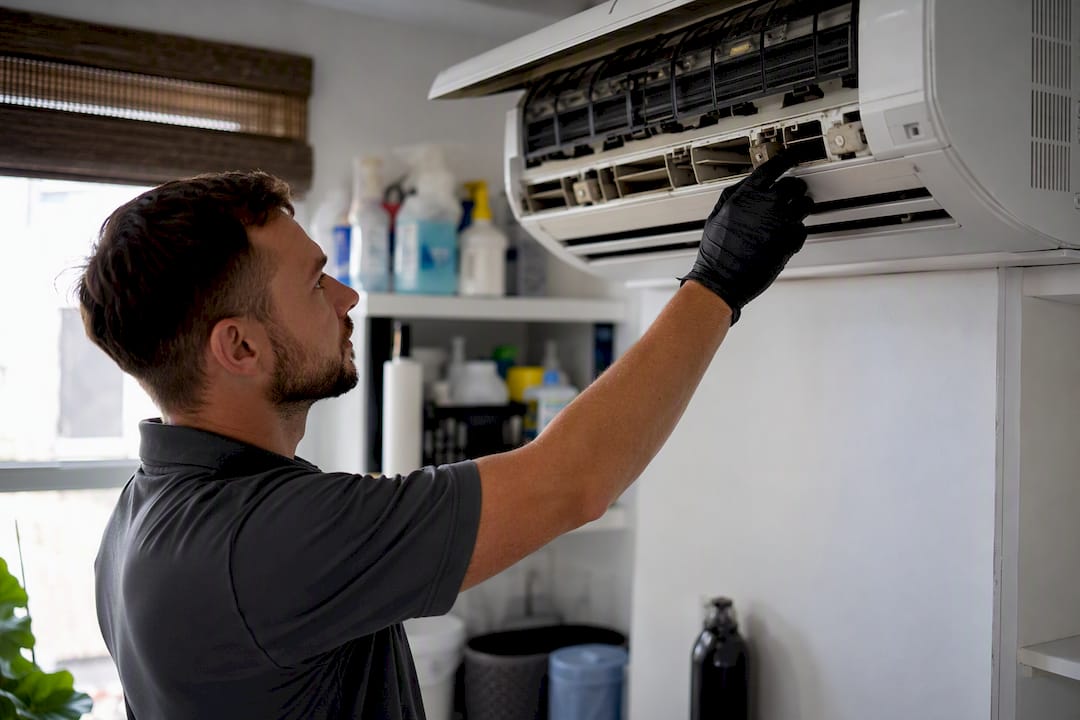
- Full inspection of the indoor unit, filter, and coil
- Deep cleaning of the evaporator coil to restore airflow and reduce freezing risk
- Condensate drain check and clearing to prevent backups
- Verification that the outdoor unit has proper clearance and airflow
Regular professional cleaning doesn't replace the daily checks above, but it catches the buildup that leads to frozen coils and drain backups before they become a service call. Natural Resources Canada also points to routine HVAC maintenance as a straightforward way to keep cooling systems running efficiently.
| Point | Details |
|---|---|
| Filter cleaning cadence | Clean every two to four weeks during heavy summer use to prevent coil icing. |
| Professional cleaning frequency | Book a technician inspection annually for cooling-only systems. |
| Certification matters | INCV-certified technicians follow standardized cleaning and inspection procedures. |
Could a faulty sensor be why it feels warm inside?
Every mini split relies on a thermistor near the indoor coil, and sometimes another near the return air path, to tell the compressor how hard to work. If that sensor drifts out of calibration or fails outright, the unit can read the room as cooler than it actually is and throttle back the compressor even though you're sweating on the couch.
A sensor problem often looks different from a filter or airflow issue. The airflow feels normal, the outdoor fan runs fine, but the room temperature displayed on the remote doesn't match a separate thermometer placed near the unit. That mismatch is the clue. Try placing a basic room thermometer a few feet from the indoor head and comparing its reading to what the remote reports after 20 minutes of steady operation. A gap of more than 2 to 3°C suggests the sensor is misreading, not that the compressor is underperforming.
Homeowners can't recalibrate these sensors themselves in most cases, since they're integrated into the control board rather than a standalone adjustable part. Some higher-end units include a service menu that lets a technician offset the reading, but reaching that menu usually requires the installer or service manual codes that aren't in the standard remote.
If you suspect a sensor fault, don't chase the temperature by dropping the setpoint lower and lower. That just makes the compressor run longer without fixing the underlying mismatch, and it can accelerate wear. Log the discrepancy, note when it started, and pass that detail to a technician. It narrows the diagnostic time considerably compared to a vague "it's not cooling" call.
Is your mini split just too small for the room?
An undersized unit will run constantly and still lose the battle against a hot room, especially with west-facing windows or a kitchen nearby. This isn't a fault at all. It's a sizing mismatch from day one that no amount of filter cleaning will solve.
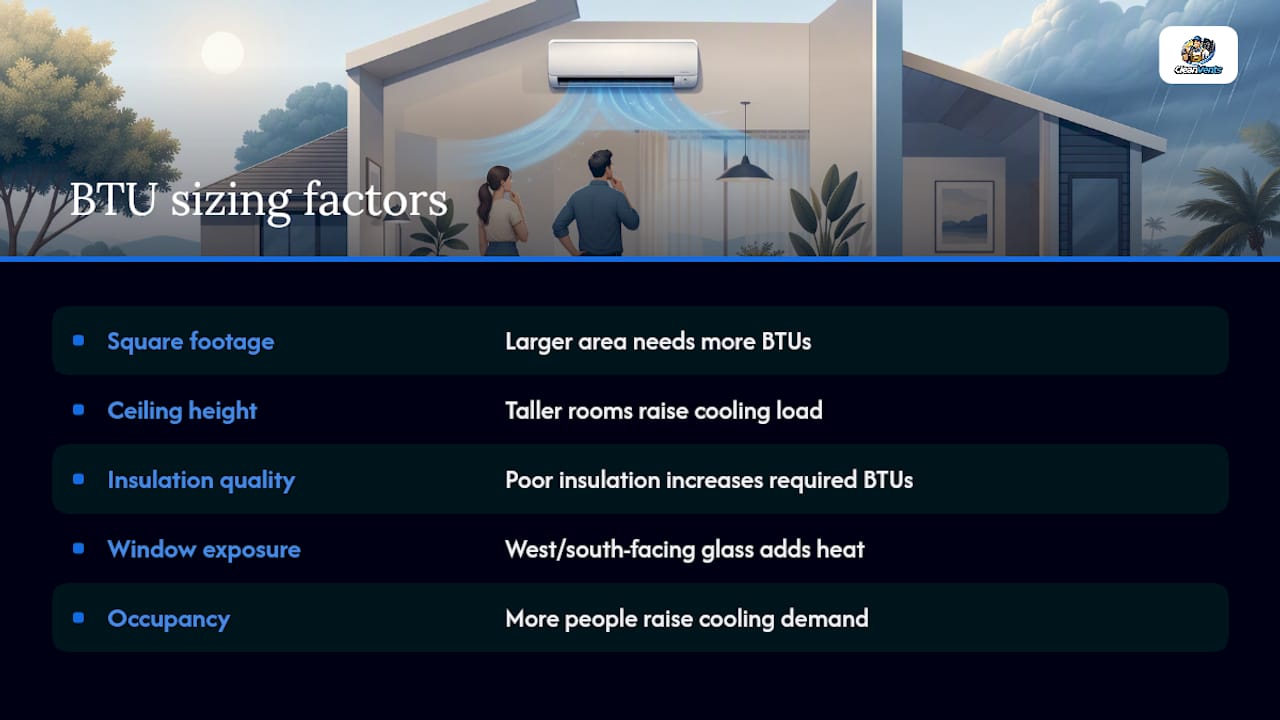
Cooling capacity for mini splits is measured in BTUs, and the right size depends on room square footage, ceiling height, insulation quality, window exposure, and how many people typically use the space. A unit sized correctly for a 300 square foot bedroom will struggle badly if it's actually cooling an open-concept living and dining area of 500 square feet with a wall of south-facing glass.
The signs of undersizing look a lot like other cooling problems at first glance: the room never quite reaches the setpoint, the compressor runs almost nonstop, and energy bills climb. The difference is timing. A sizing problem has been there since installation. If the unit cooled fine for the first year or two and only recently started struggling, sizing isn't the culprit. Look at filters, refrigerant, and outdoor obstructions first.
Oversizing causes its own headache: short cycling, where the compressor blasts cold air, satisfies the thermostat almost immediately, then shuts off before it properly dehumidifies the room. That leaves the space feeling cold but clammy. If you're troubleshooting a unit that seems to run in short bursts rather than steady cycles, ask whether the original installer did a proper load calculation or just guessed based on room size alone.
Does hot weather make my mini split work harder?
Every mini split has a rated outdoor operating range for cooling, typically somewhere around negative 5°C to 46°C depending on the model. Push outdoor temperatures toward the upper end of that range on a scorching afternoon, and the system has to work considerably harder to reject heat, which can show up as weaker-feeling airflow even when nothing is actually broken.
Heat load matters just as much as the thermometer reading. A west-facing room with large windows, a kitchen running appliances, or a space packed with electronics and people generates far more heat than the same square footage used as a quiet spare bedroom. On the hottest days of the year, a correctly sized unit can still feel like it's barely keeping up simply because the heat load has spiked past what it faces on a mild day.
This is where the outdoor unit's condition becomes critical. A condenser that's already fighting reduced airflow from debris or tight clearance has far less capacity to spare when ambient temperatures climb. That's part of why the 18 to 24 inch clearance recommendation matters more in July than in April.
If your mini split cools fine on moderate days but struggles noticeably once outdoor temperatures pass the mid-30s Celsius, that's often the system running near the edge of its rated capacity rather than a sign of failure. Confirm the outdoor unit has full clearance and clean coils before assuming something is broken, since that's the one variable you can control on a heat wave day.
When installation mistakes are the real culprit
Some cooling complaints trace back to decisions made the day the system went in, long before any dust or ice entered the picture. A refrigerant line set that's too long without the correct additional charge, an indoor unit mounted too close to the ceiling to draw air properly, or a line set with too many tight bends can all quietly limit cooling capacity from day one.
Improperly evacuated line sets are a particularly sneaky problem. If a technician doesn't pull a proper vacuum before charging the system during installation, moisture and air remain trapped in the lines. That contamination can cause intermittent cooling issues that look like a slow refrigerant leak but are actually a installation defect that surfaces months or even a year later.
Incorrect refrigerant charge at installation is another common culprit. Too little charge starves the system the same way a leak would; too much charge can flood the compressor and reduce efficiency just as badly. Neither is something you'd notice by looking at the unit. Both only show up as unexplained weak cooling that filter cleaning and clearance checks won't fix.
Placement matters too. An indoor head installed directly above a heat source, or an outdoor unit crammed into a corner with poor airflow circulation on more than one side, will underperform compared to the same equipment installed with proper spacing. If your mini split has never cooled quite right since the day it was installed, and basic maintenance hasn't moved the needle, the installation itself is worth having reviewed by a qualified technician rather than assuming a part has failed.
Author's take: fix the free stuff first
Ninety percent of the calls we hear about start with a filter that hasn't been touched in months. Check settings, power, and airflow before anything else. Never open a sealed refrigerant line yourself, and never ignore a tripping breaker. Book a professional cleaning once a year, and most "not cooling" calls never happen.
— Clean Vents
Get ahead of it before summer hits
Waiting until your mini split stops cooling mid-heatwave is the expensive way to learn this lesson. Clean Vents offers upfront flat-rate pricing on wall AC cleaning across Laval and the surrounding communities, backed by INCV-certified technicians and a satisfaction guarantee. A single seasonal cleaning clears the coil buildup and drain sludge that cause most of the frozen-coil and weak-airflow calls covered in this guide, before they turn into a no-cool emergency.
Sources
- Ductless mini-split troubleshooting: fault codes, frozen coils, and communication errors | ServiceMag
- Mini-Split AC troubleshooting: common problems & fixes | FilterBuy
- Mini Split Repair Guide | Troubleshooting & Service | Carrier
- Fujitsu General troubleshooting / compressor restart delay
FAQ
Why is my mini split blowing air but not cooling?
Air movement without cooling usually means the unit is on Fan or Dry mode instead of Cool, or the outdoor condenser isn't running due to a tripped breaker or blocked fan.
What are the symptoms of low refrigerant in a mini split?
Watch for hissing or bubbling near the line set, ice forming directly on the refrigerant lines, and persistently weak or lukewarm air even after the filter is clean.
Why isn't my split system getting cold?
The most common cause is restricted airflow from a dirty filter or blocked outdoor unit; if both are clear and it still won't cool, low refrigerant or a sensor fault likely needs a technician.
How do I reset a mini split air conditioner?
Turn the unit off at the remote, then cut power at the breaker for about one minute before restoring it. Allow up to three minutes after restart for the compressor's built-in delay to clear before judging performance.