
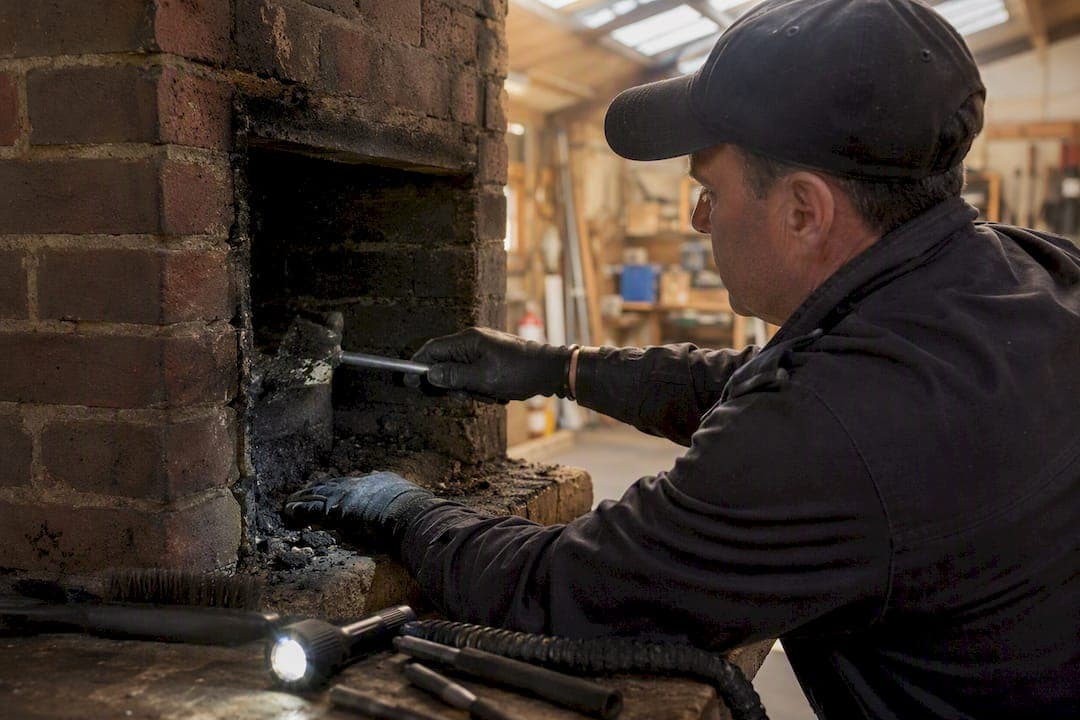
Get your chimney inspected once a year, full stop. Whether it needs an actual sweep depends on what that inspection finds: NFPA 211 sets the trigger at 1/8 inch of creosote buildup, and the Chimney Safety Institute of America backs the same standard. Had a chimney fire, sold the house, or renovated recently? You need a Level 2 inspection, not the basic annual check. Clean Vents follows this exact framework for every job.
TL;DR:
- Inspect your chimney annually, but only sweep when deposits reach 1/8 inch or if inspection finds glaze or obstructions, especially for heavy wood use.
- Gas fireplaces generally require inspection every year but only need sweeping every three to five years unless issues are detected during inspection.
- Heavy or frequent wood burning, unseasoned wood, or poor draft conditions may necessitate two sweeps per year, typically in fall and spring.
- A Level 2 inspection with video scoping is mandatory after chimney fires, major renovations, or when the chimney's service history is not documented.
- Scheduling inspections before the heating season begins helps catch potential issues early and allows time for repairs if needed.
Table of Contents
- How often should you sweep your chimney? A schedule by fuel type
- What actually changes how often you need a sweep?
- What's the difference between a chimney sweep and an inspection?
- When to book, what it costs, and what happens during the visit
- Why homeowners across Laval and the surrounding area trust this guidance
- Why "once a year" is the wrong way to think about this
- Book a chimney inspection and sweep with Clean Vents
- Sources
- FAQ
How often should you sweep your chimney? A schedule by fuel type
The "clean it once a year and forget it" advice floating around is only half right. Inspect annually, always. But how often you actually sweep depends heavily on what you're burning and how hard you're burning it.
Gas fireplaces are the low-maintenance end of the spectrum. According to guidance on chimney sweep frequency, gas appliances typically need inspection every year but may go three to five years between sweeps, unless that inspection turns up deposits or corrosion. Wood is a different story entirely, and pellet stoves sit somewhere in the middle.
Here's a realistic breakdown based on fuel type and how much you actually use your fireplace:
| Usage level | Wood | Pellet | Gas | Oil |
|---|---|---|---|---|
| Light (fewer than 10 fires/season) | Annual sweep | Annual sweep | Annual inspection, sweep as needed | Annual inspection |
| Moderate (weekly fires in season) | Annual sweep, check mid-season | Annual sweep | Annual inspection | Annual inspection, sweep every 1-2 years |
| Heavy (daily fires, full season) | Twice yearly | Annual sweep, inspect mid-season | Annual inspection | Annual inspection, sweep annually |
| Primary heat source | Twice yearly, minimum | Twice yearly | Annual inspection, sweep as needed | Annual sweep |
The Spruce recommends fall sweeps before burn season starts and a second look in spring for anyone burning heavily through winter. That fall timing matters for a practical reason: it catches nesting debris, structural damage from freeze-thaw cycles, and any creosote that built up over the previous season, all before you're relying on the fireplace for heat.
A few scheduling notes worth keeping in mind:
- Fall sweeps catch summer debris and prep the flue before the heating season begins.
- Spring sweeps clear out the season's creosote before it sits in a damp flue all summer, which accelerates corrosion.
- Two sweeps a year make sense for heavy users, anyone burning unseasoned wood, or households noticing soot faster than expected.
Pro Tip: If you burned through a full cord of wood or more this winter, book your spring sweep even if the chimney "looks fine." Creosote glazing can form invisibly on the flue liner and won't show up without a scope.
One thing that overrides any calendar: if your chimney experienced an actual chimney fire, it needs a Level 2 inspection before it's used again, regardless of when the last sweep happened.
What actually changes how often you need a sweep?
Fuel type, burn habits, and your chimney's construction all push the "annual" baseline up or down. Understanding these variables lets you self-assess between professional visits instead of guessing.
Fuel type is the biggest lever. Unseasoned or green wood burns cooler and dirtier, depositing creosote far faster than seasoned hardwood. Family Handyman's breakdown of sweep frequency points out that softwoods like pine also throw more sap and resin into the flue than hardwoods like oak or maple.
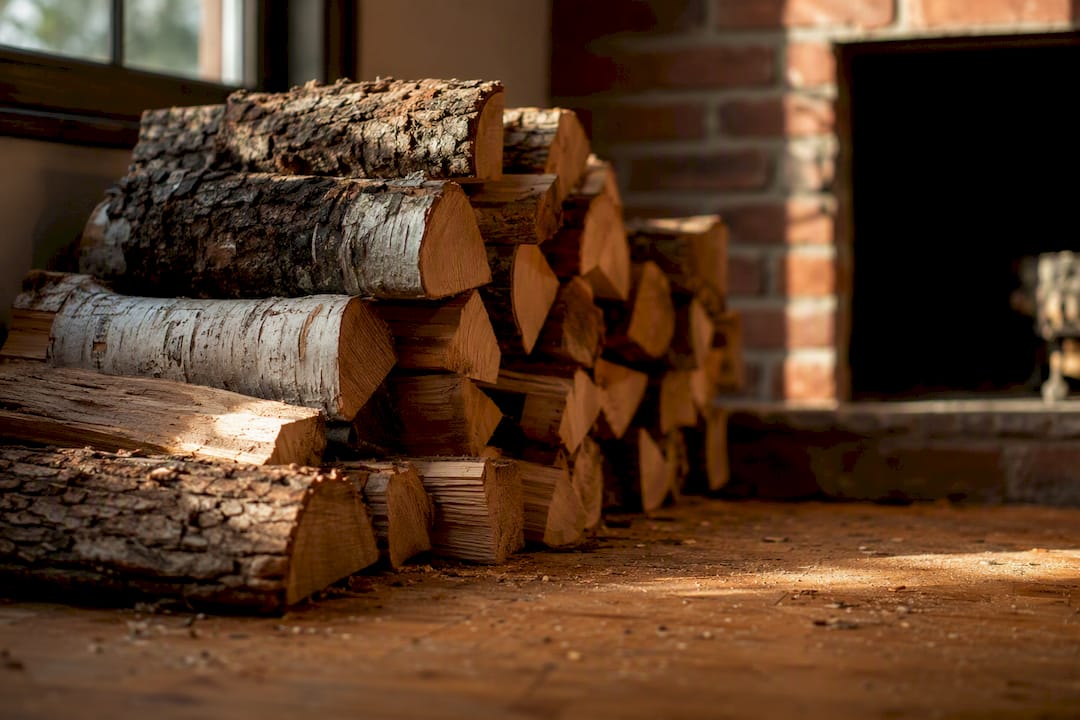
Usage intensity matters just as much as fuel. A household burning ten fires a season is in a completely different category than one running a wood stove as its primary heat source through a Canadian winter. The more fires, the faster that 1/8 inch threshold gets reached.
Draft and burn temperature explain why two households burning the same wood can need different schedules. Low, slow, smouldering fires produce far more creosote than hot, well-ventilated burns, because incomplete combustion sends unburned particles straight up the flue where they condense and stick.
Construction type plays a role too. Masonry chimneys, prefabricated metal chimneys, and wood stove installations each accumulate deposits differently and have different inspection access points.
Watch for these signs that mean you shouldn't wait for your scheduled sweep:
- Smoke backing up into the room instead of drawing up the chimney
- A strong campfire or acrid smell coming from the fireplace when it's not in use
- Visible black flakes or tar-like residue in the firebox
- Soot streaks on the wall above the fireplace opening
Any of those warrants a call now, not a note on next fall's calendar.
What's the difference between a chimney sweep and an inspection?
An inspection tells you whether you need a sweep. A sweep removes what the inspection found. Conflating the two is where a lot of homeowners go wrong, and it's worth understanding the two-tier system that CSIA and NFPA 211 both use.
Level 1 is the standard annual check: a visual inspection of the readily accessible parts of the chimney, flue, and connections, done every year regardless of how much you burned. Level 2 goes further, using a video camera to scope the entire flue interior, and it's required in specific situations:
- After any chimney fire, even a small one
- Before selling or buying a property with a fireplace
- Following a major renovation or relining
- When there's no documented service history for the chimney
NFPA 211's core logic is straightforward: inspect every year without exception, then sweep only when the inspection confirms deposits have reached that 1/8 inch mark, or when glaze, scale, or an obstruction turns up. Technicians measure buildup with a probe or a specialized scraping tool, and increasingly document it on camera so you have a visual record, not just a verbal estimate.
That documentation step catches problems a sweep alone would miss entirely. Cracked flue tiles, gaps in the liner, or animal nests deep in the flue don't show up just from brushing. They show up when someone actually looks.
When to book, what it costs, and what happens during the visit
Late summer through early fall is the window to call, before the pre-season rush hits and before you need heat. Booking then, as industry guidance on chimney service timing points out, also gives you time to schedule any repairs the inspection flags before the cold sets in.
Pricing varies by region and job complexity, but the biggest cost drivers are consistent: whether a video inspection is included, whether repairs (a cracked crown, a damaged liner) turn up, and how accessible your chimney actually is. A straightforward Level 1 sweep costs less than a job that adds Level 2 scoping and documentation.
A proper visit typically includes:
- A visual or video inspection of the flue and firebox
- Mechanical sweeping to remove creosote, soot, and debris
- A written report noting condition and any recommended repairs
- Cleanup of the work area, including drop sheets and vacuum containment
Before the technician arrives, clear furniture away from the hearth and move anything flammable at least a metre back. Once the job's done, keep the damper closed until you're ready for your first fire, and don't burn anything for at least 24 hours if repairs (like sealant or mortar work) were part of the visit.
Why homeowners across Laval and the surrounding area trust this guidance
Clean Vents technicians hold INCV certification, the standard for professional venting and chimney work in Quebec, and every job comes with upfront flat-rate pricing so there's no surprise invoice after a video inspection turns up more than expected.
This isn't a house opinion on frequency. It's built on the same framework the industry itself relies on:
- CSIA guidance on annual inspection and how professionals measure and document deposits
- NFPA 211, the standard behind the 1/8 inch sweep trigger used across this article
- HPBA Canada, which recommends WETT-certified technicians handle the annual visit
Clean Vents backs every inspection and sweep with a satisfaction guarantee, and technicians walk homeowners through exactly what they found, in plain language, before any work starts.
Why "once a year" is the wrong way to think about this
Most of the confusion around chimney maintenance comes from treating it like an oil change: a fixed interval you set once and follow forever. That's not how creosote works, and it's not how NFPA 211 was written. The standard is condition-based on purpose. Annual inspection is the fixed part. Sweeping is the variable.
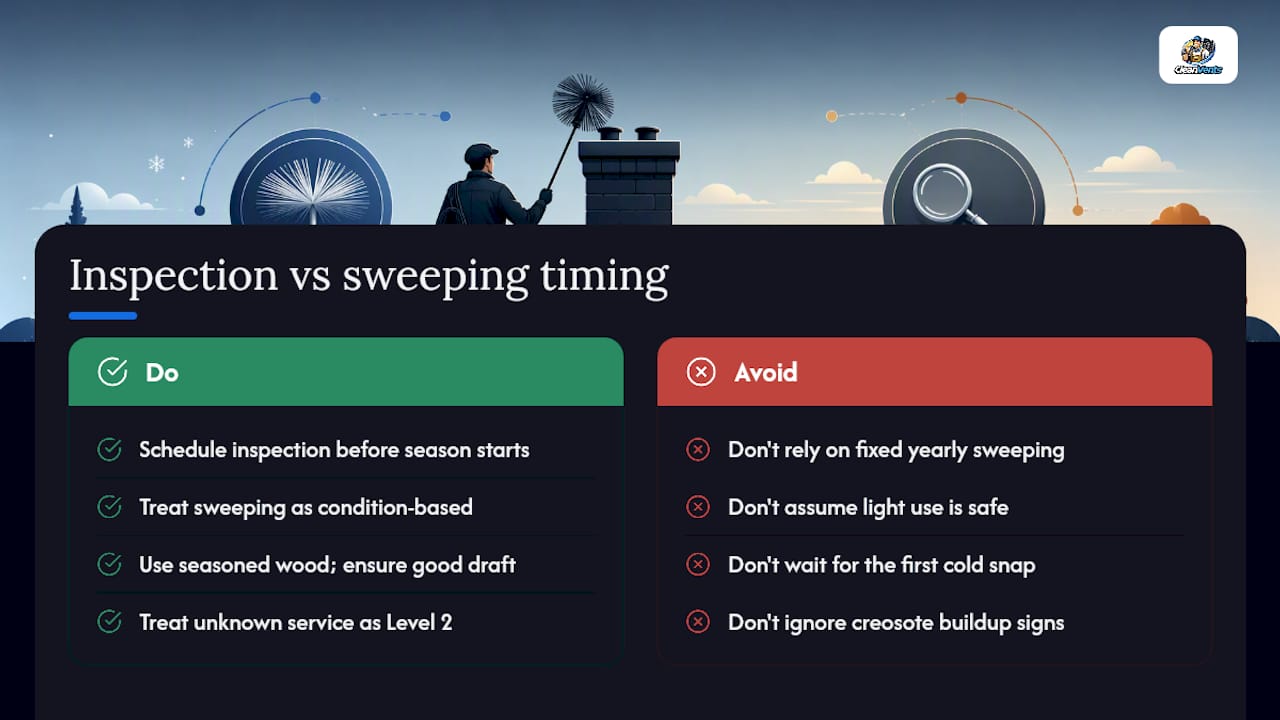
We'd argue the bigger mistake homeowners make isn't skipping maintenance entirely. It's assuming light use means no risk. A fireplace lit six times a season with unseasoned wood can accumulate more creosote than one used twice a week with dry hardwood and good draft. Usage frequency alone tells you almost nothing without knowing what's actually burning and how well it's burning.
Book your inspection before the season starts, not during the first cold snap when everyone else is calling too. And if nobody can tell you when the chimney was last serviced, treat that as a Level 2 situation, not a Level 1 formality.
— Clean Vents
Book a chimney inspection and sweep with Clean Vents
Clean Vents is the direct route to sorting this out. No guessing which fuel-and-usage row on a chart applies to your household. A technician looks at your actual flue, measures the actual creosote, and tells you exactly what it needs.
Every visit includes the Level 1 visual check, and Level 2 video scoping when your situation calls for it (post-fire, pre-sale, or unknown history). You get a written report with photos, not a verbal "looks fine," and pricing is flat-rate and quoted upfront before any work begins. INCV-certified technicians handle the sweep itself, and the same team can look at your dryer vents while they're already on-site, since blocked vents carry similar fire-risk logic to a neglected flue.
If your chimney hasn't been inspected in the last year, or you're not sure when it last was, book a chimney inspection and sweep with Clean Vents before the season fills up. It takes a few minutes to get a quote, and you'll know exactly where your chimney stands before you light the first fire.
Sources
- The importance of regular chimney cleaning
- How often to sweep a chimney
- How often should you have your chimney cleaned?
- How often to clean chimney flue, explained
FAQ
What is the 3:2:10 rule for chimneys?
The 3:2:10 rule is a chimney height guideline, not a cleaning schedule: the chimney should extend at least 3 feet above the roofline, and 2 feet above any structure within 10 feet, to maintain proper draft and reduce fire risk.
How often should I sweep my chimney?
Get an inspection every year, then sweep when creosote reaches 1/8 inch, glaze or scale appears, or an obstruction turns up, per NFPA 211. Heavy wood users often need two sweeps a year, typically one in fall and one in spring.
How often should you clean creosote from a chimney?
Creosote should be removed once it reaches the 1/8 inch threshold identified by NFPA 211, which for many wood-burning households works out to once a year, and twice a year for heavy use or unseasoned wood.
Do gas fireplaces need chimney sweeping every year?
Gas fireplaces need an annual inspection, but sweeping itself can often wait three to five years unless that inspection finds deposits or corrosion, since gas burns much cleaner than wood.
When is a Level 2 inspection required instead of a standard check?
A Level 2 inspection, which uses video scoping of the full flue, is required after any chimney fire, before a property sale, after major renovations, or when the chimney's service history is unknown.