
TL;DR:
- Professional duct cleaning shows visible results only when significant contamination exists and includes verified before-and-after evidence.
- EPA recommends cleaning when there is visible mold, pests, or debris, not as routine maintenance, and proper documentation involves timestamped photos and airflow data.
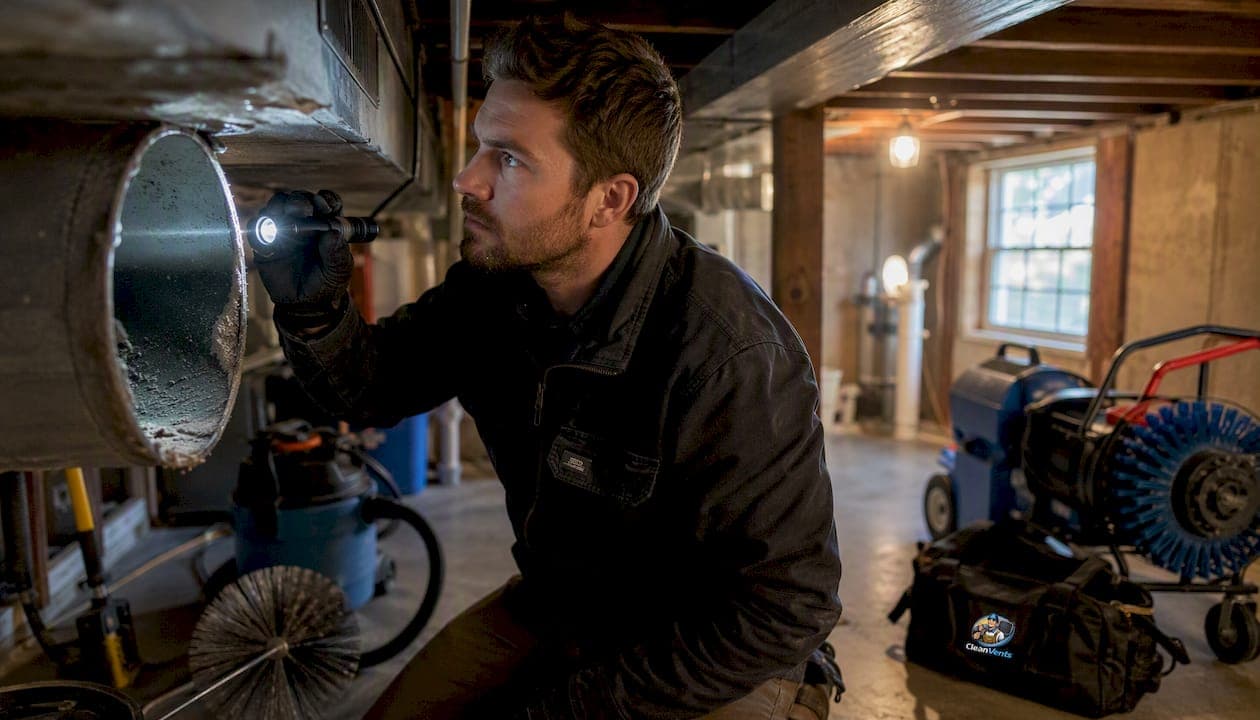
Professional duct cleaning can produce clear, visible before-and-after results — but only when substantial contamination is actually present. The U.S. Environmental Protection Agency is direct about this: cleaning is not recommended as routine maintenance. Do it when you have visible mould, pest evidence, or heavy debris buildup. When those conditions exist, the difference between a pre-job and post-job photo is unmistakable. When they don't, results are modest and largely invisible.
Two standards anchor what legitimate duct cleaning looks like in Canada: EPA guidance sets the threshold for when cleaning is warranted, and INCV (Institut national en certification de ventilation) certification confirms a technician has met a recognized training standard. Clean Vents, based in Laval, Quebec, uses INCV-certified technicians and documents jobs with time-stamped photos and a post-cleaning checklist.
What to expect and ask for:
- Before-and-after photos taken from consistent angles, with timestamps
- Supply and return register images showing debris removed
- Airflow or CFM readings taken before and after
- A signed post-cleaning checklist from the technician
- Lab confirmation if mould is claimed (not just visual assertion)
Table of Contents
- What legitimate before-and-after duct cleaning evidence looks like
- How professionals actually clean ducts and what the timeline looks like
- How effective is duct cleaning, really?
- Which tests and measurements to request before and after cleaning
- How to prepare your home before the appointment
- What duct cleaning typically costs and how long it takes
- Red flags to watch for and questions to ask before hiring
- Clean Vents brings documented proof to every job in Laval
- Key takeaways
- What homeowners actually notice after a documented clean
- Useful sources and further reading
What legitimate before-and-after duct cleaning evidence looks like
Not every "before and after" photo set is honest. Some providers use stock images, mismatched lighting, or photos from different properties entirely. Knowing what genuine documentation looks like protects you.
Visual cues in credible before photos:
- Settled grey or brown dust coating trunk walls and branch lines
- Accumulated lint near return registers, especially in older systems
- Dislodged or compressed insulation inside flex ducts
- Rust staining or dark mould patches near coil areas
- Debris visible at register openings (pet hair, construction dust, insect casings)
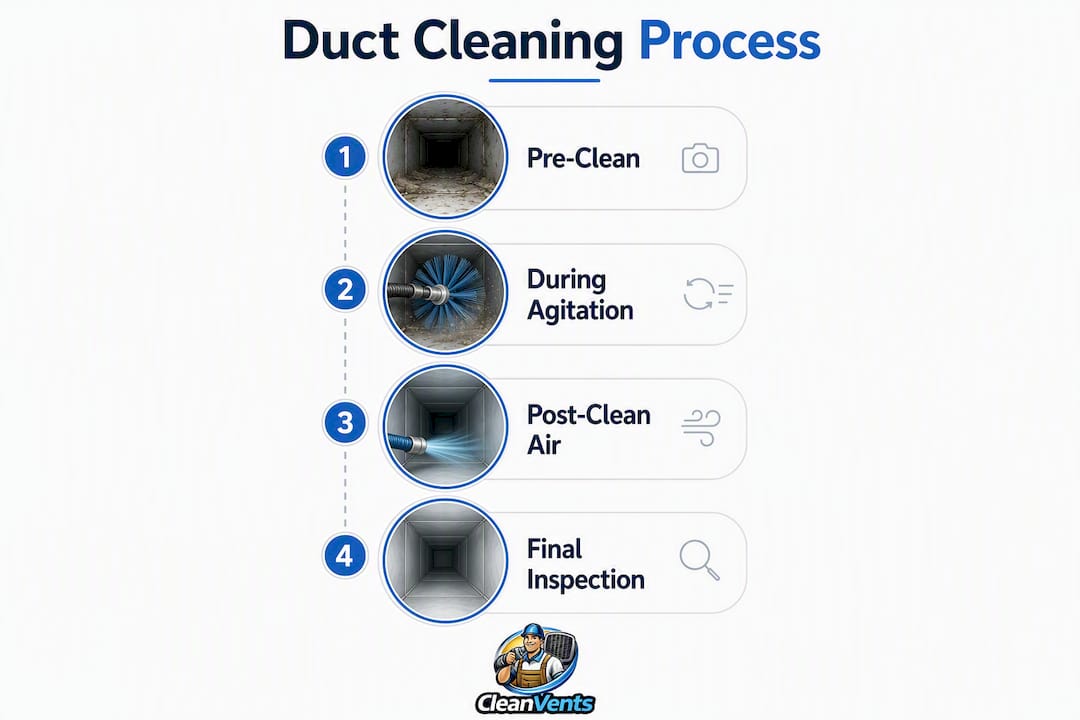
A credible photo set includes four stages: pre-job (before any equipment enters), during agitation (showing the cleaning tools in action and debris being dislodged), post-job (clean duct walls from the same angle), and a technician verification shot showing the collected debris in a clear bag or canister.
Pro Tip: Ask for a time-stamped crawl-cam video rather than single stills. A continuous video from inside the duct, with the date and time visible, is far harder to fake than two isolated photos.
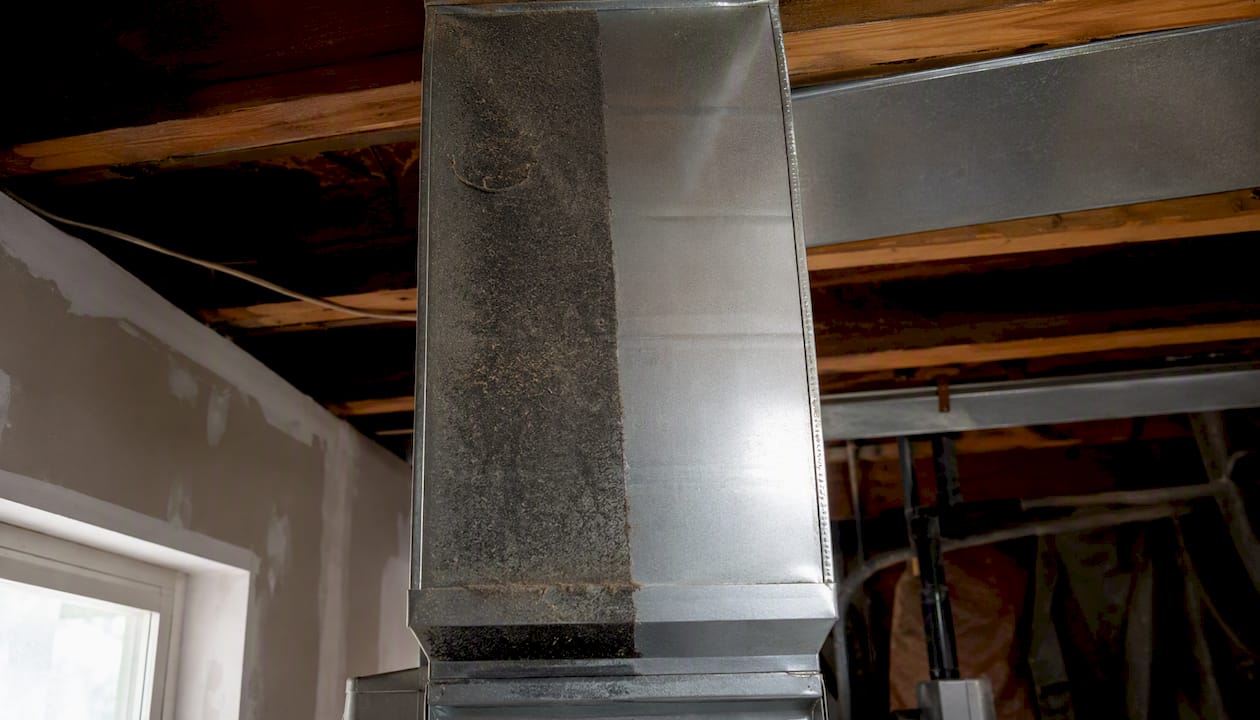
Evaluate photos for matching vantage points, consistent lighting, and an undisturbed surrounding area. If the "after" photo shows a different register cover or a different wall colour, ask why.
| Evidence type | What to look for | Red flag |
|---|---|---|
| Before photo | Debris, dust coating, consistent angle | No timestamp, generic stock look |
| During photo/video | Tools in duct, visible debris dislodged | No action shots at all |
| After photo | Clean duct walls, same angle as before | Different angle, suspiciously bright |
| Debris sample | Collected material in clear bag | No physical evidence shown |
| Technician checklist | Signed, itemized, dated | Verbal-only confirmation |
How professionals actually clean ducts and what the timeline looks like
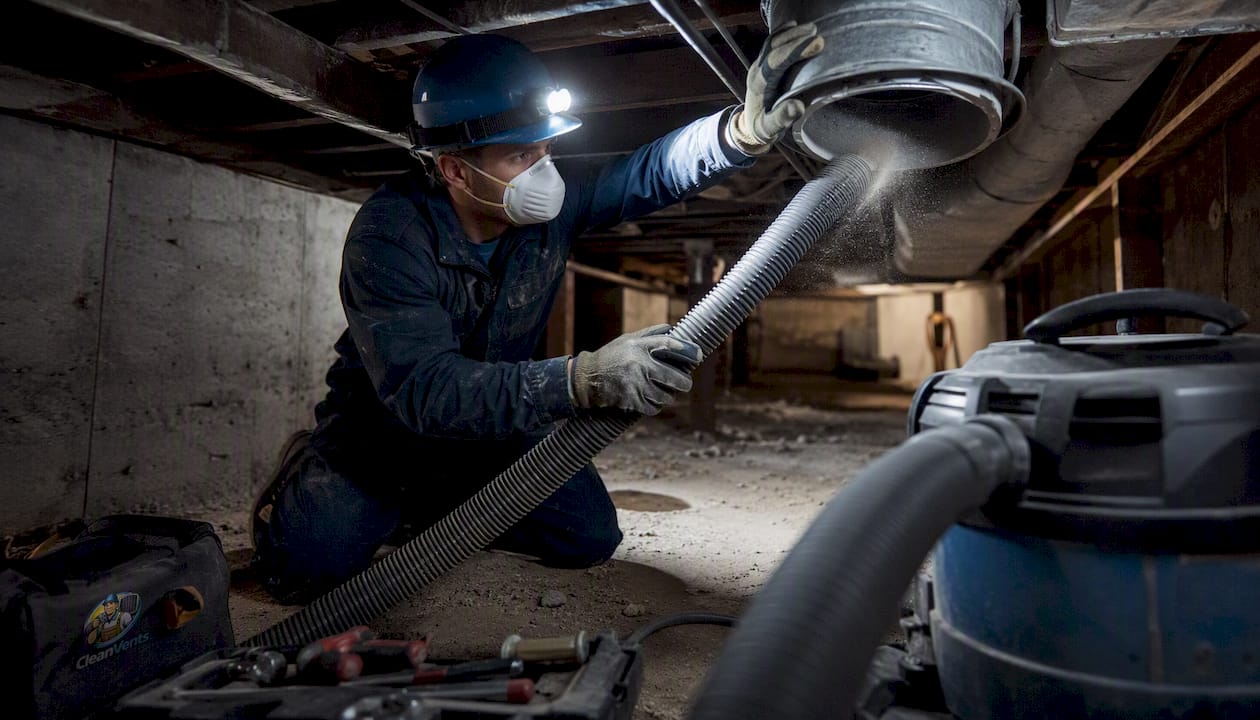
A properly executed job follows a sequence: seal registers, create negative pressure using a HEPA-filtered vacuum unit connected to the main trunk, then agitate debris using rotating brushes or air-whip tools that drive buildup toward the vacuum. Coil and blower cleaning follow, since a dirty coil re-contaminates clean ducts within weeks. Register cleaning is the final step before the system is re-pressurized.
Sanitization or encapsulation should only be applied when a specific problem warrants it — not as a default upsell. If a technician recommends chemical treatment before showing you any evidence of mould or biological growth, that's a flag worth noting.
A professional should show you the collected debris in a clear bag or canister at the end of the job. If you can't see what came out of your ducts, you have no way to judge whether the cleaning was thorough.
During the job, a good technician will offer camera footage of the main trunk before and after agitation. They should also record airflow readings at key registers and note any access issues or damaged sections.
Most single-family homes typically require a few hours of service, with duration varying by system size, layout complexity, and contamination level. A heavily built-up system in a large home can push toward the upper end of that range.
| Factor | Effect on timeline |
|---|---|
| Home size (sq ft) | Larger homes add registers and trunk length |
| Number of returns | Each return adds access and cleaning time |
| Contamination level | Heavy buildup requires more agitation passes |
| Coil/blower cleaning | Adds 30–60 minutes to the job |
| Access difficulty | Crawlspace or attic runs extend the job |
How effective is duct cleaning, really?
The EPA's position is worth quoting plainly: duct cleaning has not been shown to prevent health problems, and the evidence that it improves air quality in most homes is limited. The agency recommends cleaning only when substantial visible contamination exists — confirmed mould growth, pest infestation, or heavy debris that is actually restricting airflow.
"Duct cleaning has never been shown to actually prevent health problems. Neither do studies conclusively demonstrate that particle (e.g., dust) levels in homes increase because of dirty air ducts." — U.S. EPA
That said, realistic benefits do exist when the right conditions are present:
- Visible debris removal: The most consistent and photographable result. Trunk walls and registers come out noticeably cleaner.
- Odour reduction: When the odour source is duct-based (mould, rodent debris, construction dust), cleaning addresses it directly.
- Localized airflow improvement: Heavily obstructed registers can show modest CFM gains after cleaning.
What cleaning won't do: stop the dust your household generates daily. Cleaning removes settled debris from duct surfaces, but it doesn't stop particles produced inside the home — cooking, skin cells, pet dander, and tracked-in dirt keep circulating regardless. A HEPA vacuum and regular filter changes matter more for ongoing dust control than a one-time duct clean.
Some homeowners also notice a temporary allergy flare-up in the hours after cleaning. Disturbed trapped particles can briefly worsen symptoms, though this typically resolves within a day or two. HEPA-filtered containment during the job reduces this risk significantly.
Which tests and measurements to request before and after cleaning
A practical verification package has three parts: a pre-clean photo, a live video during agitation, and a post-clean airflow snapshot. Matching those three makes the before-and-after claim verifiable rather than decorative.
Pro Tip: Bring a flashlight and photograph two or three registers yourself before the technician arrives. Your own dated photos give you an independent baseline that no provider can dispute.
| Measurement | How to request it | What a good result looks like |
|---|---|---|
| Pre/post photos | Ask for time-stamped images at same angles | Visible debris in before, clean walls in after |
| Airflow/CFM | Ask tech to measure at 2 supply registers | Modest improvement or stable reading |
| Static pressure | Measured at air handler | Reduced restriction if buildup was heavy |
| Particle count (IAQ meter) | Optional; request if allergies are a concern | Lower reading one day post-clean |
| Mould lab test | Required if mould is claimed | Written lab report, not visual assertion only |
If visible debris remains after the job, or airflow shows no change despite a reported heavy buildup, request a re-clean or ask the technician to document why the result was limited. A reputable provider will have an answer.
How to prepare your home before the appointment
Good preparation makes the job faster and keeps your before-and-after evidence clean.
- Clear the areas around all supply and return registers — furniture, rugs, and stored items should be moved at least 60 cm away
- Secure pets in a separate room or arrange for them to be elsewhere during the job
- Disable smoke or CO alarms near the work area if the technician requests it (confirm this step with them in advance)
- Confirm the furnace or air handler is accessible and that the filter has been noted but not replaced (the tech may want to see its condition)
- Vacuum near vents the day before so your baseline photos reflect duct contamination, not surface dust you tracked in
- Note any odours, visible staining, or registers that have felt weak — write these down to share with the technician
- Sensitive occupants (those with asthma or severe allergies) should plan to be out of the home during the clean and ventilate on return
Confirm pricing, scope, and the verification package before the technician arrives. A written quote with itemized services prevents surprises.
What duct cleaning typically costs and how long it takes
Cost depends on several factors, none of which should be a mystery if you have a written quote.
| Cost driver | Typical impact |
|---|---|
| Home size / number of registers | Primary driver; more registers = higher cost |
| Access difficulty | Crawlspace or attic runs add labour |
| System condition | Heavy buildup may require extra passes |
| Add-ons (coil, blower, particle test) | Each adds to total; confirm in writing |
| Flat-rate vs. per-register pricing | Flat-rate is easier to compare; per-register can add up |
Most single-family homes fall within a 2–5 hour service window. Mould remediation or insulation repair, if needed, is a separate scope and cost — a legitimate provider will identify this before starting, not mid-job.
Red flags to watch for and questions to ask before hiring
Walk away if you see any of these:
- Guarantees of dramatic health improvements or allergy cures
- Refusal to provide pre-job photos or camera footage
- No written quote before work begins
- No INCV certification or technician credentials on request
- Pressure to buy chemical sanitization without showing evidence of biological growth
- A quote that arrived unsolicited and is suspiciously low
Ask every provider these questions before booking:
- Which standards do you follow (INCV, NADCA)?
- Will you provide time-stamped photos and airflow measurements?
- Do you use HEPA vacuums and negative pressure throughout the job?
- What does your post-cleaning checklist include?
- What is your satisfaction guarantee and how do I invoke it?
A provider who hesitates on any of these — especially the photos or the checklist — is telling you something.
Clean Vents brings documented proof to every job in Laval
Most duct cleaning providers hand you a verbal "all done." Clean Vents hands you evidence.
Clean Vents is a Laval-based provider with INCV-certified technicians who document every job with time-stamped before-and-after photos, camera footage of the main trunk, and a signed post-cleaning checklist. The flat-rate pricing is confirmed in writing before any work starts, and a satisfaction guarantee backs every job. Optional add-ons — coil cleaning, blower cleaning, and particle-count testing — are available for homeowners who want a full indoor air quality snapshot. Dryer vent cleaning and wall AC cleaning are also available for a complete whole-home service.
To get a free quote or ask about the verification package, visit the Clean Vents service page or call to book an appointment.
Key takeaways
Before-and-after duct cleaning results are real and photographable when substantial contamination exists — but the EPA is clear that cleaning is not a routine health measure, and visual proof only counts when it is time-stamped, angle-matched, and paired with airflow data.
| Point | Details |
|---|---|
| EPA threshold | Clean when you have visible mould, pests, or heavy debris — not as routine maintenance. |
| Valid proof requires three things | Time-stamped photos, a live agitation video, and pre/post airflow readings at the same registers. |
| Typical job duration | Most single-family homes take 2–5 hours depending on size and contamination level. |
| Dust won't disappear entirely | Cleaning removes settled duct debris; daily household dust requires HEPA vacuuming and regular filter changes. |
| Clean Vents | Laval-based, INCV-certified, and provides documented before/after proof with every job. |
What homeowners actually notice after a documented clean
The most consistent homeowner report is visual: registers that were visibly grey or clogged look clean, and the debris bag at the end of the job is genuinely surprising to most people. Airflow at previously weak registers often feels stronger, though the improvement is usually modest rather than dramatic. Odour complaints tied to the duct system — musty smells after the furnace kicks on, for example — tend to resolve when the source was actually in the ducts.
What homeowners don't always expect is the brief dustiness in the first day or two after cleaning. Disturbed particles settle on surfaces before the filter catches them. This is normal and temporary.
For landlords, documented before-and-after proof serves a second purpose: it demonstrates due diligence to incoming tenants and supports tenant retention by showing the property was professionally maintained. Cleaning frequency and visible proof of maintenance also factor into how occupants perceive a property's overall condition and value.
The homeowners who feel most satisfied after a duct clean are the ones who requested the evidence package upfront. They have photos to compare, a checklist to reference, and a measurable baseline if they ever need to assess the system again. That's the difference between trusting a provider and being able to verify them.
Useful sources and further reading
| Source | What it covers |
|---|---|
| EPA: Should You Have the Air Ducts in Your Home Cleaned? | Official guidance on when cleaning is warranted, health claims, and mould verification |
| How Long Does Air Duct Cleaning Take? | Time estimates by home size and contamination level |
| How to Prepare Your Home for an Air Duct Cleaning | Pre-appointment prep checklist for homeowners |
| Why Are My Allergies Worse After Duct Cleaning? | Post-cleaning symptom explanation and HEPA containment guidance |
| Clean Vents Air Duct Cleaning Service | Local Laval provider with INCV certification and documented verification package |