
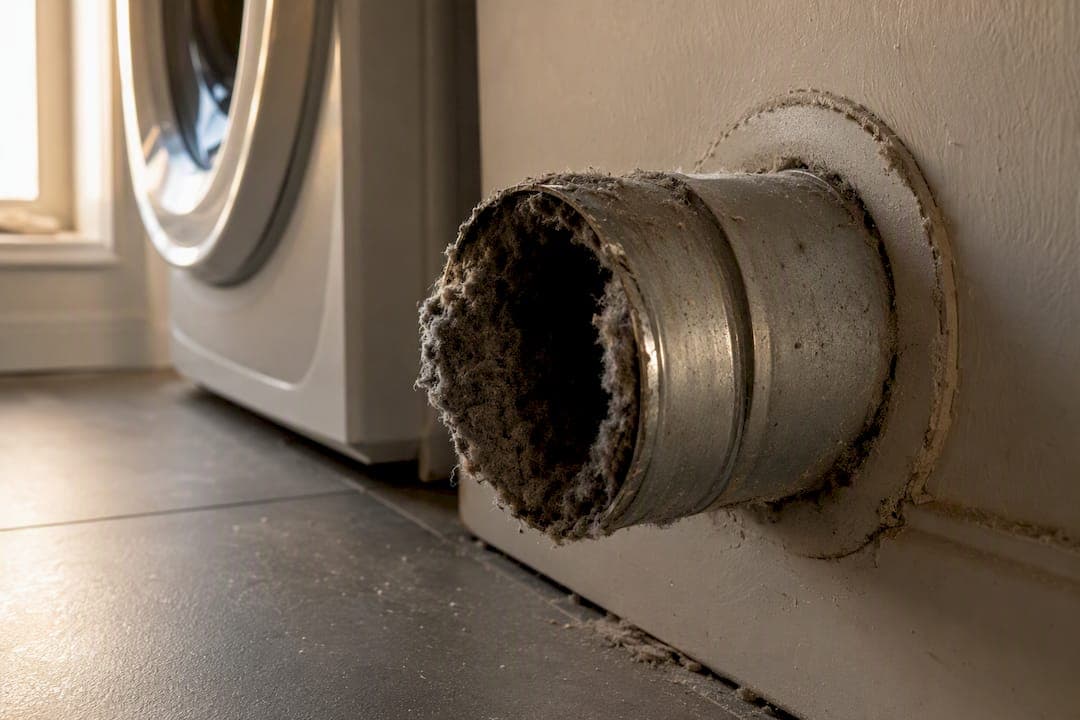
Yes, condo dryer vents need professional cleaning, usually every one to two years, and sooner if your unit shares a long vertical stack with other suites or shows any warning sign of a blockage. This isn't a nice-to-have chore. A clogged dryer vent is a fire hazard that can affect every unit connected to the same riser, not just yours.
If you're wondering whether tonight is the night to worry, here's your triage:
- Check now: Does your dryer take noticeably longer to dry a normal load? Is there a burning or musty smell near the laundry closet?
- Look outside: If you can see the exterior vent while the dryer runs, is airflow weak or barely noticeable?
- Act on it: If you notice any of these, shut the dryer off and book a professional inspection. Property managers should schedule a full stack inspection the moment more than one unit reports the same issue.
Key Takeaways
Condo dryer vents need professional cleaning roughly every one to two years, and shared risers mean one unit's neglect can put an entire building at fire risk.
| Point | Details |
|---|---|
| Book by warning sign | Longer drying times, burning smells, or a hot dryer casing mean call a professional now, not later. |
| Follow the annual baseline | Clean every year by default, tightening to six months for pets, rentals, or long duct runs. |
| Know the responsibility split | In-suite flex and lint traps are usually the owner's job; shared risers usually belong to the condo corporation. |
| Skip risky DIY shortcuts | Leaf blowers and improvised tools can pack lint deeper and damage shared ductwork. |
| Choose documented service | Clean Vents provides INCV-certified technicians with before-and-after photos and airflow verification for condo jobs. |
Table of Contents
- Why condo dryer vent cleaning matters for building-wide safety
- How often should condo dryer vents be cleaned?
- Warning signs your condo dryer vent needs cleaning now
- Who's responsible: condo owner or condo corporation?
- What a professional condo dryer vent cleaning includes
- Typical cost and timeline for condo dryer vent cleaning
- DIY maintenance: what's safe and what to leave to professionals
- How to choose a qualified condo dryer vent cleaning contractor
- Publisher perspective: why we stress condo dryer vent safety
- Booking a professional condo dryer vent cleaning
- Sources
- FAQ
Why condo dryer vent cleaning matters for building-wide safety
The National Fire Protection Association reports that lint buildup in dryer vents is a leading factor behind numerous home clothes dryer fires each year. That statistic gets scarier once you understand condo architecture: most buildings route dryer exhaust through shared vertical stacks that connect dozens of units to a single roof termination.
A blockage doesn't stay contained to one suite. Lint accumulating in a shared riser raises pressure and heat risk for every unit feeding into that stack, and a fire that starts in one laundry closet can travel through the same ductwork that connects to your neighbours. The Canadian Condominium Institute flags this exact complexity, noting that shared risers and long duct runs make condo systems fundamentally different from a single-family home's short, straight vent line.
Beyond fire risk, a clean vent system pays off in ways you feel every laundry day:
- Faster drying cycles and lower energy bills, since a clogged vent forces your dryer to work harder for the same result
- Fewer nuisance smoke alarms triggered by overheating dryers in poorly ventilated closets
- Better indoor air quality, since a properly sealed and clean vent keeps lint, dust, and moisture out of shared air spaces
- Reduced strain on your dryer's motor and heating element, which extends its working life
How often should condo dryer vents be cleaned?
Annual cleaning is the baseline most condo residents are advised to follow, according to guidance from Clean Vents' own frequency recommendations. Some situations call for tightening that schedule to more frequent cleanings, while low-use, short-run setups can sometimes stretch to two years.
Frequency shifts based on a few practical factors:
- Pet owners: fur adds to lint volume fast, shortening the safe interval between cleanings.
- Rental or Airbnb units: higher laundry turnover means faster lint accumulation.
- Long duct runs or multiple elbows: every bend is a spot where lint can catch and build up.
- Older buildings: aging ductwork often has rougher interior surfaces that trap more debris.
For planning purposes, think in two tiers:
- Owner-level: book an annual inspection tied to a fixed month (spring is popular, since it follows the heavy winter laundry season).
- Building-level: property managers should map every stack and stagger inspections across a full year rather than trying to service the whole building at once.
Warning signs your condo dryer vent needs cleaning now
A few red flags mean you shouldn't wait for your scheduled annual service. Watch for:
- Drying times creeping up, even for small loads
- A burning or musty smell near the dryer or laundry closet
- Noticeably more lint collecting behind or under the dryer than usual
- The dryer's exterior casing feeling hot to the touch during a cycle
- Condensation or unexplained dampness around the laundry closet walls
Here's a quick test you can run yourself: have someone hold a tissue or a sheet of paper near the exterior vent while the dryer runs on a normal cycle. Weak or absent airflow pulling the paper toward the vent usually means a blockage somewhere in the line. Strong, steady suction is a good sign.
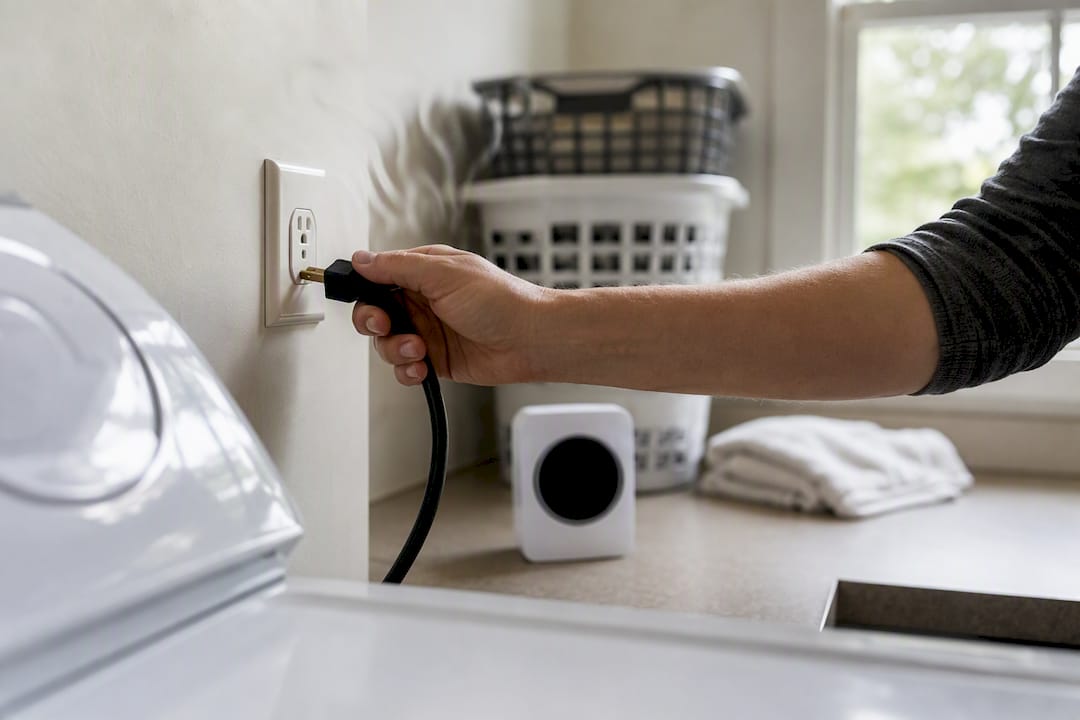
If you spot a burning smell or notice the dryer casing is unusually hot, that's not a "wait and see" situation. Shut the dryer off immediately, unplug it if it's safe to do so, and notify your property manager the same day.
Who's responsible: condo owner or condo corporation?
Responsibility usually splits at the wall. The flexible hose connecting your dryer to the wall outlet, and your lint trap, are almost always your job as the unit owner. Once exhaust hits the common riser, the rooftop termination, and any shared vertical stack, that portion typically falls to the condo corporation. Your declaration or bylaws will spell out the exact line, and it's worth pulling that document once rather than guessing.
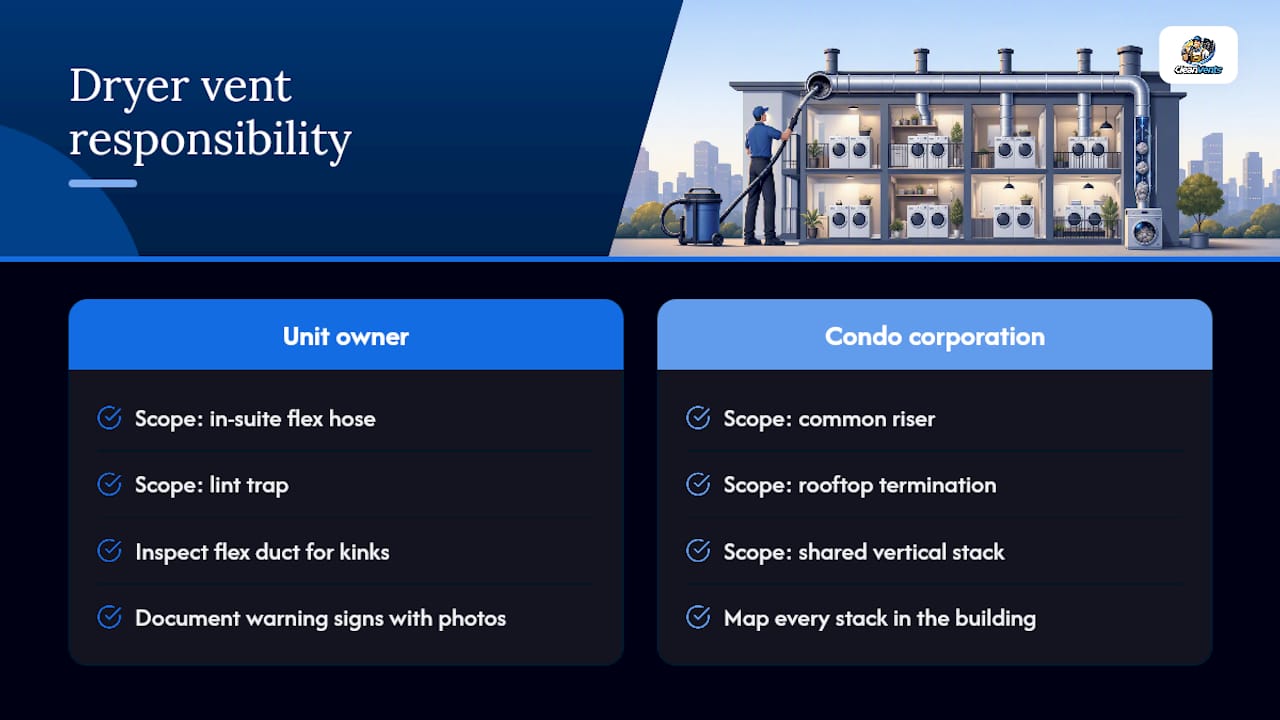
Owners should: inspect their in-suite flex duct for kinks, document any warning signs with photos, and notify the property manager in writing rather than mentioning it in passing.
Property managers should: map every stack in the building, schedule inspections on a rotating basis, and send residents a heads-up before any building-wide work begins.
Pro Tip: Send this exact line to your property manager or board when reporting an issue: "Our unit is experiencing [longer drying times / a burning smell] from the dryer vent. Given that this may involve the shared riser, could you arrange an inspection of our stack?" It puts the ball in their court with the right framing.
What a professional condo dryer vent cleaning includes
A proper job follows a predictable sequence, and knowing the steps helps you spot a rushed or incomplete service before you pay for it. Clean Vents documents its full process for condo units, and it typically runs like this:
- Suite preparation, including protecting floors and finishes near the laundry area
- Disconnecting the dryer from the exhaust duct
- Rotary brushing and air-whipping to break up compacted lint along the duct walls
- Rooftop or riser access when the blockage extends into the shared stack
- High-powered vacuum extraction to remove loosened debris
- Reconnection and a final airflow check
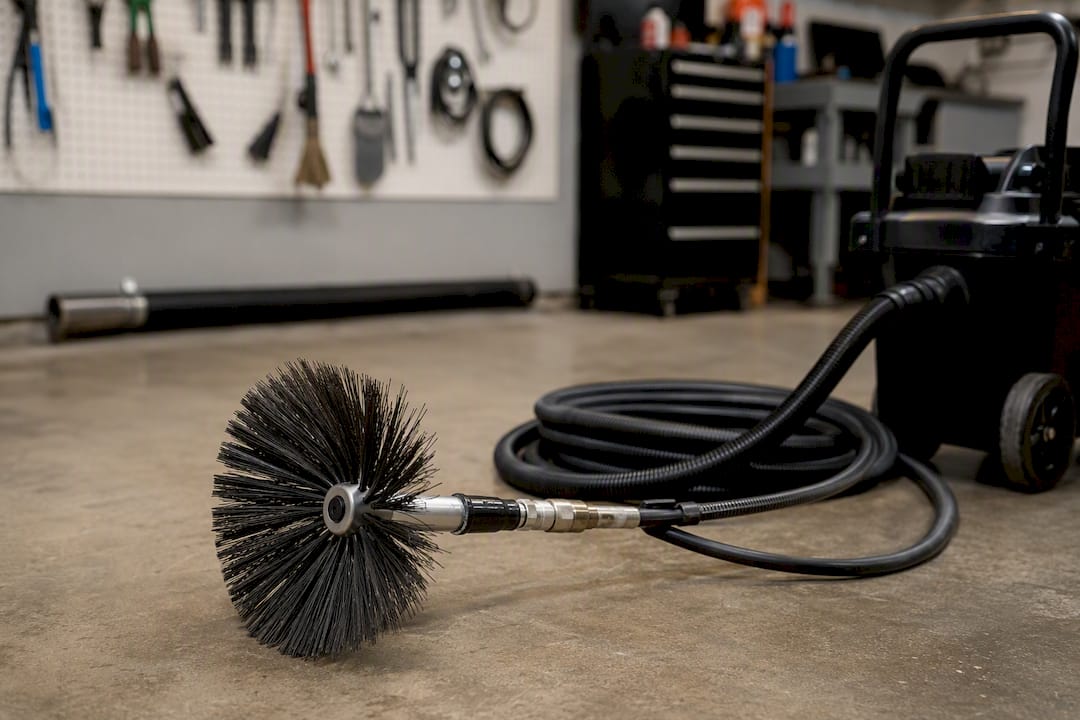
The tools involved matter: rotary brushes, high-powered vacuums, air-whip agitators, inspection cameras, and airflow meters all play a role, and experienced multi-unit technicians often need access from both the roof and the suite to fully clear a compacted vertical stack.
A thorough technician also checks for kinks, backdraft damper function, proper termination clearance, moisture buildup, and general duct condition. Pro Tip: Ask for documented airflow readings or before-and-after photos as proof of a complete job. Anyone who can't produce this evidence probably didn't do the full service.
Typical cost and timeline for condo dryer vent cleaning
Expect a single-suite dryer vent cleaning to run somewhere in the range most local providers quote for standard residential jobs, with the final number shifting based on duct length, the number of elbows, how accessible the vent is, and whether rooftop or riser work is needed. A straightforward single-suite visit typically takes under an hour. Building-wide stack programs take longer overall, since managers usually stagger units across a schedule rather than closing the whole building's laundry access at once.
A proper quote should itemize:
- Base cleaning fee for the in-suite portion
- Any rooftop coordination or riser access fees
- Inspection camera use, if the technician needs to confirm a deep blockage
- A written report or photo documentation for your records
DIY maintenance: what's safe and what to leave to professionals
Some upkeep is genuinely fine to handle yourself. Clean the lint trap after every single load, vacuum the accessible portion of your flexible hose a few times a year, check that the external flap opens freely, and inspect the flex duct behind the dryer for kinks or crushed sections when you move the unit for cleaning.
Where you need to stop: never use a leaf blower on a dryer vent, and don't push improvised tools deeper into the duct hoping to dislodge a clog. Clean Vents' guidance on long dryer vent cleaning is blunt about this, and for good reason: rooftop terminations and long vertical stacks require rotary brush equipment and vacuum extraction that a household vacuum simply can't replicate. Attempting it yourself often packs lint deeper into the duct rather than removing it, which can damage the ductwork and push debris into a riser that other units rely on.
Pro Tip: If your dryer vent has more than one elbow or runs vertically through a wall you can't fully see, that's your cue to call a professional rather than experiment.
How to choose a qualified condo dryer vent cleaning contractor
Ask a handful of pointed questions before you book anything:
- Are you insured, and can you provide proof?
- Are your technicians INCV-certified or equivalently trained for vent cleaning?
- Do you have experience with condo risers and rooftop access, not just single-family homes?
- Will you provide a written inspection report, before-and-after photos, and airflow verification?
- What's your warranty or guarantee if the job doesn't resolve the issue?
Red flags worth walking away from: a company that quotes a flat low price sight-unseen without a site visit, refuses to show past before-and-after evidence, or can't produce proof of insurance on request.
Clean Vents fits this checklist directly: INCV-certified technicians, documented before-and-after photos, and local service coordination across Laval and the surrounding area make it a solid option for condo residents and property managers who want a paper trail to hand to their board or insurer, not just a clean vent.
Publisher perspective: why we stress condo dryer vent safety
We keep coming back to one point in this guide: a dryer vent problem in a condo is rarely just your problem. That's the piece too many single-family home guides miss entirely. Our focus on documentation, proper technician training, and coordinating with property managers isn't paperwork for its own sake. It's what lets a board or insurer trust that a job was actually done, not just quoted. Respectful, well-communicated access matters as much as the brush and vacuum work itself.
Booking a professional condo dryer vent cleaning
If you've spotted a warning sign or your unit is overdue for its annual check, the next move is simple: get a professional look at the whole line, not just the part you can see behind the dryer.
Clean Vents handles condo dryer vent cleaning across Laval, Rosemère, Boisbriand, Blainville, Lorraine, Bois-des-Filion, and Sainte-Thérèse with upfront flat-rate pricing, so you know the cost before a technician sets foot in your suite. On service day, expect suite protection, a defined time window, and a written report with before-and-after photos and airflow verification when the job wraps up.
Property managers coordinating a full stack or building-wide program can request a scheduling plan that staggers units, sends resident notices ahead of time, and delivers a portal-ready report for board or insurance records. Whether you're one unit with a burning smell or a building with six units overdue, you can request a free quote for dryer vent cleaning and get a real technician on-site rather than a guess over the phone.
Sources
- Home fires involving clothes dryers and washing machines — NFPA research
- The importance of duct & dryer vent cleaning for condo & townhouse residents — CCI resource centre
FAQ
How often should I clean the dryer vent in my condo?
Annual cleaning is the standard recommendation, though pet owners, rental units, and suites with long or vertical duct runs often need service every six months.
Do dryer vents in condos need to be cleaned?
Yes, condo dryer vents need regular cleaning because shared risers and vertical stacks mean a blockage in one unit can raise fire risk for the whole building.
What is the typical cost for dryer vent cleaning?
Cost depends on duct length, elbow count, and whether rooftop or riser access is needed; request an itemized quote for accurate pricing.
Can I clean out my dryer vent myself?
You can safely clean your lint trap and the accessible part of your flexible hose yourself, but leaf blowers, improvised tools, and rooftop or riser work should be left to a trained technician.