
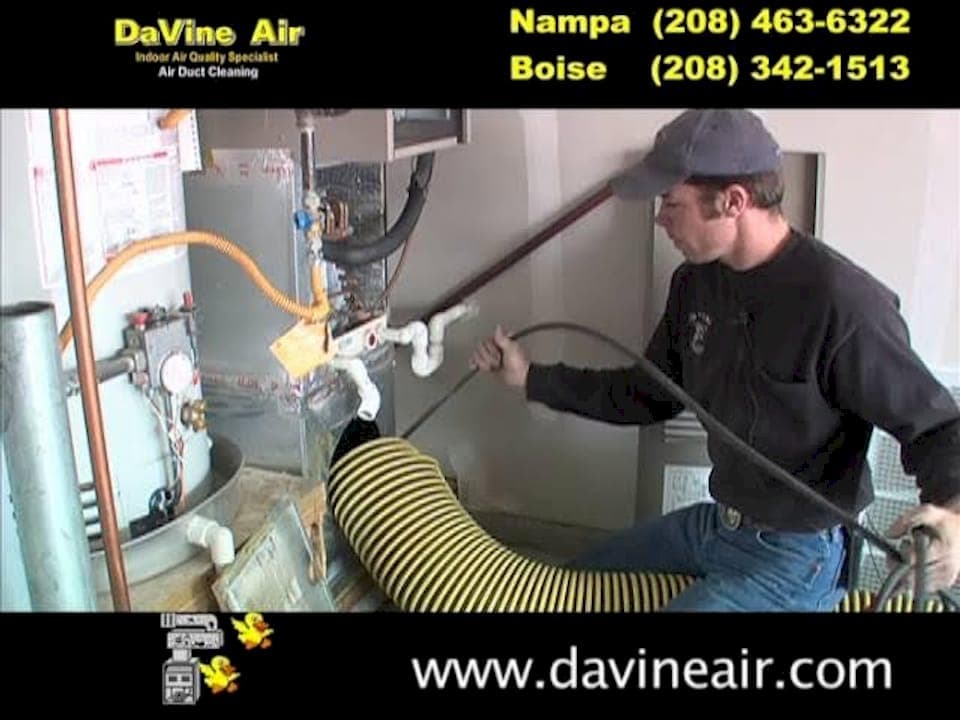
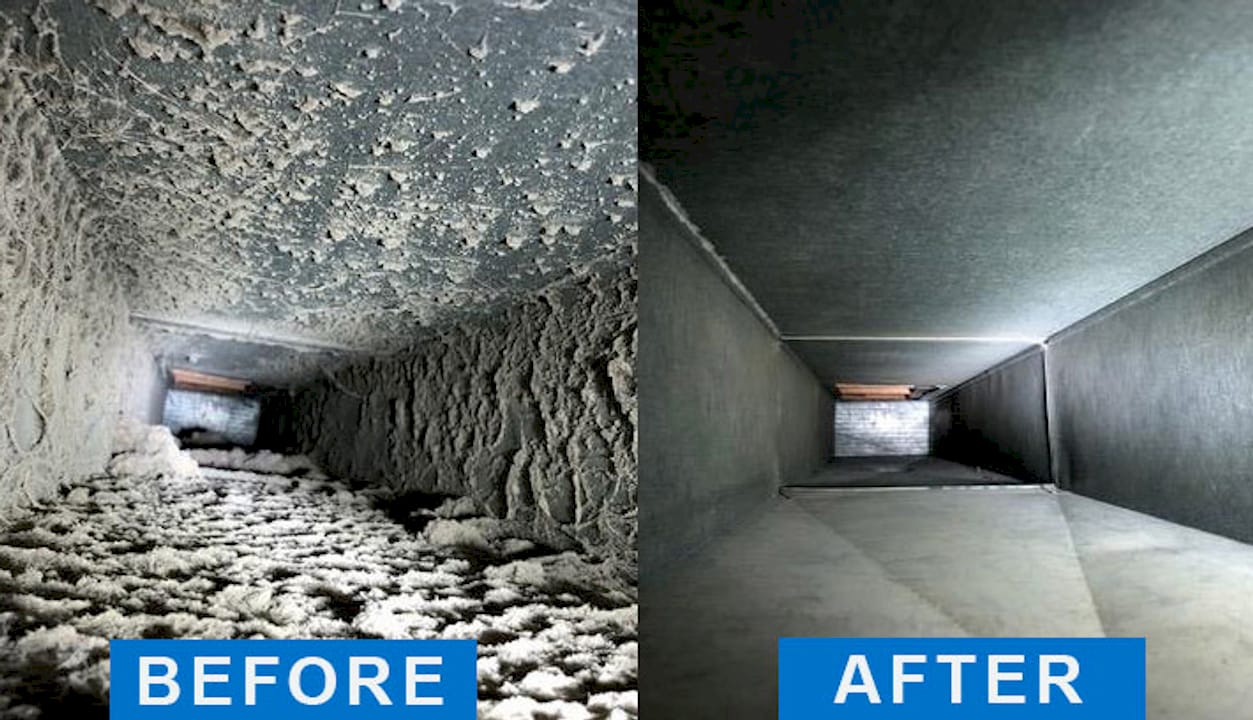
Air duct cleaning is a whole-HVAC service that removes accumulated dust, debris, mould, and contaminants from your ductwork, blower, coils, and registers. You need it when your system shows a specific trigger, not on a fixed annual schedule. The EPA advises cleaning only as needed, and NADCA’s ACR standard ties the decision to documented conditions rather than the calendar.
Triggers that justify a professional cleaning:
-
Visible mould inside ducts or on HVAC components
-
Evidence of rodents or insects in the system
-
Post-construction or renovation debris in the ductwork
-
Water intrusion or flooding that reached the system
-
Debris actively discharging from registers into rooms
-
Persistent odours that return after filter changes
-
Significant airflow loss with no other mechanical cause
For a typical Canadian detached home, the price for a standard duct cleaning service varies with system size and contamination level. Most residential jobs take a few hours on site.
Table of Contents
What does air duct cleaning actually include?
The term “duct cleaning” is a bit misleading. A proper service cleans the entire HVAC system, not just the metal ducts. According to INCV’s cleaning method guidance, a complete job covers the supply and return ducts, the air handler unit, blower assembly, evaporator coils, drain pan, and all registers and grilles. Cleaning only the ductwork while leaving the coils and blower untouched causes rapid recontamination — the dirty components simply push debris back into the clean ducts within weeks.
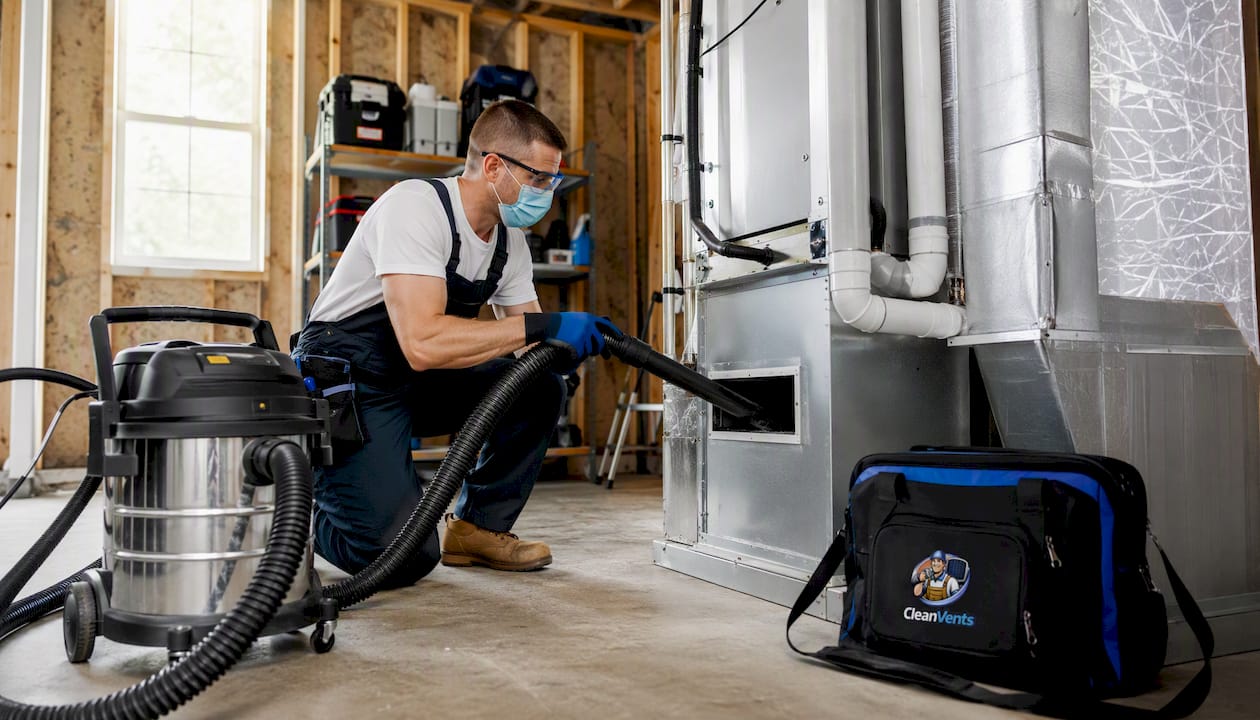
The work happens in two technical stages. First, technicians use mechanical agitation tools (air whips, or compressed-air nozzles) to loosen debris from duct walls and component surfaces. Second, a HEPA-filtered vacuum running under continuous negative pressure captures everything that gets dislodged. That negative pressure is what keeps loosened particles from escaping into your living space during the job.
Some companies offer optional add-ons: antimicrobial biocides or encapsulant sealants. The EPA notes these should only be applied after thorough mechanical cleaning and only when evidence justifies them, since misapplied sealants can affect fire properties and void equipment warranties. If a technician recommends them before even inspecting the system, that is a red flag, not a value-add.
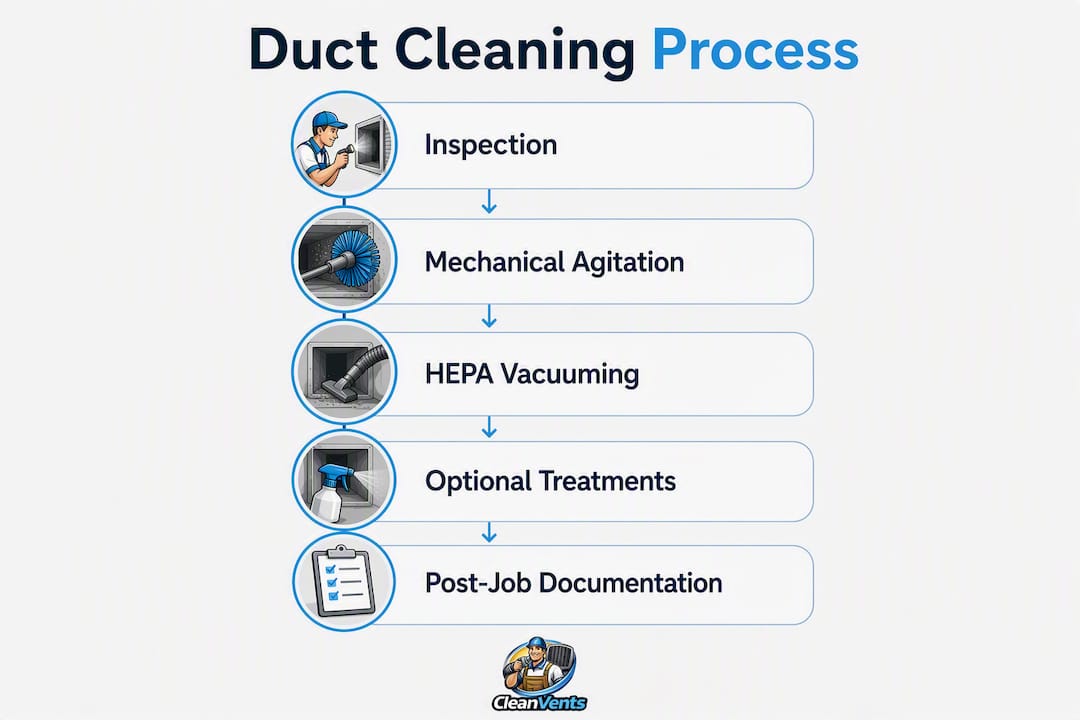
Pro Tip: Ask for a written scope of work before any technician touches your system. It should list every component being cleaned, the agitation method, the vacuum equipment being used, and how cleanliness will be verified. A reputable company will also take before-and-after photos or conduct a camera inspection.
Signs your ducts need cleaning and what benefits to expect
The honest answer on health benefits is that the evidence is limited. The EPA does not recommend routine duct cleaning as a preventative health measure, and there is no strong research showing that cleaning ducts in an otherwise normal home reduces respiratory illness. That said, when a real trigger exists, cleaning delivers concrete results.
Signs worth acting on:
-
Mould visible on duct surfaces or around registers
-
Pest droppings, nesting material, or insect evidence inside ducts
-
Dust or debris visibly blowing out of registers after filter changes
-
Recent major renovation or new construction that left drywall dust in the system
-
Musty or chemical odours that persist after the HVAC runs
-
Allergy or asthma symptoms that worsen noticeably when the system runs
When cleaning is done to standard, realistic benefits include restored airflow, elimination of odour sources, reduced debris circulating through the home, and in some cases measurable energy improvements when coils were fouled. The NADCA ACR standard identifies construction debris, water damage, visible contamination, and infestation as the objective conditions that justify cleaning.
What the EPA actually says: Duct cleaning has not been shown to prevent health problems. Source control — keeping moisture and dirt out of the system in the first place — is the primary indoor air quality strategy. Cleaning is a targeted remediation step, not a routine household chore.
How professional duct cleaning is carried out
A reputable company follows a documented process. Here is what that looks like from start to finish:
- Final verification — The technician performs a visual check (NADCA Method 1) or, when warranted, a surface comparison or vacuum test (Methods 2 and 3 from the ACR 2025 standard) to confirm the system meets cleanliness criteria.
Certifications and standards to look for
Three credentials carry real weight in Canada: NADCA (National Air Duct Cleaners Association), IICRC (Institute of Inspection, Cleaning and Restoration Certification), and INCV (Institut National de Certification en Ventilation). NADCA certification means the technician has passed a documented exam and follows a code of ethics tied to the ACR standard. IICRC and INCV credentials indicate additional training in inspection and restoration methods. Ask for certification numbers, not just a logo on a van.

Pro Tip: After the job, ask for the before-and-after photos, the written scope of work, and any test results from the verification step. A company that resists providing this documentation likely did not complete the full scope.
What does duct cleaning cost in Canada?
Pricing varies by system size, contamination level, and what is included. The table below reflects typical Canadian market ranges.
| Job type | Typical price range (CAD) | What is usually included |
|---|---|---|
| Small home or condo | Pricing varies | Supply/return ducts, registers, basic inspection |
| Average detached home | Pricing varies | Full duct system, blower, registers, photos |
| Large home or multi-zone system | Pricing varies | Full system, coils, drain pan, inspection |
| Add-ons (dryer vent, coil cleaning, biocide) | Pricing varies | Per-service pricing varies by provider |
Main cost drivers:
-
Number of supply and return vents
-
System complexity (multi-zone, older flex duct, hard-to-access areas)
-
Presence of mould or heavy contamination requiring extra agitation or chemical treatment
-
Whether coil and drain pan cleaning are included
-
Equipment type: NADCA notes that both truck-mounted and portable vacuum systems can meet standards, but truck-mounted units typically offer higher suction capacity for larger systems
-
Add-on services such as dryer vent cleaning, which also reduces fire risk
Timeline to plan for: A small condo job runs about an hour or more. An average detached home takes a few hours. Large homes or heavily contaminated systems can require longer service times. Clear the area around registers and the furnace room before the technician arrives to keep the job moving.
Can you clean your own air ducts?
Some tasks are genuinely within reach for a homeowner. Replacing or upgrading to a higher-MERV filter, vacuuming accessible register covers, and keeping humidity below 50% to discourage mould growth are all worthwhile and safe. These are source-control measures, and the EPA treats them as the foundation of good indoor air quality.
Full system cleaning is a different matter. Reaching the interior duct surfaces, the blower assembly, and the coils requires equipment a homeowner simply does not have: a HEPA-filtered vacuum capable of maintaining continuous negative pressure, agitation tools designed for duct interiors, and the training to avoid damaging flexible duct, coil fins, or drain pan connections. Attempting it with a shop vac and a brush typically dislodges debris without capturing it, spreading contaminants into the living space rather than removing them.
When to always hire a professional:
-
Visible mould anywhere in the system
-
Pest or rodent contamination
-
Water damage that reached the ductwork
-
Post-construction debris in the ducts
-
Any situation where you cannot visually verify the result
The EPA’s position is clear: source control first, professional remediation when a documented problem exists. DIY attempts in contaminated systems can make conditions worse, not better.
How often should you have ducts cleaned?
Routine annual cleaning is not recommended by public health authorities or industry standards. The EPA advises cleaning only as needed, and NADCA’s ACR standard ties the decision to specific, inspectable conditions rather than a calendar interval.
That said, some situations call for a defined schedule:
-
Rental property turnover: Consider a cleaning between long-term tenants, particularly if the previous occupant had pets or smoked indoors.
-
Post-renovation: Any major renovation that generated drywall dust, insulation fibres, or debris near the HVAC system warrants cleaning before the system runs normally again.
-
Water-damaged systems: After any flooding or water intrusion that reached ductwork, cleaning and inspection are not optional.
-
Allergy-prone households: If a household member has documented respiratory sensitivities and symptoms correlate with HVAC operation, an inspection-based assessment makes sense every 3–5 years.
The practical rule: inspect first, clean when the inspection finds a documented problem. A camera inspection costs less than a full cleaning and gives you an objective answer.
How to choose a trustworthy duct-cleaning company
The duct-cleaning industry has a documented problem with predatory marketing. Fear-based sales tactics, bait-and-switch pricing, and misleading photos are common enough that industry watchdogs flag them explicitly. Here is how to protect yourself.
Hiring checklist:
-
Ask for NADCA, IICRC, or INCV certification numbers and verify them directly with the certifying body.
-
Request a written scope of work before booking, listing every component to be cleaned.
-
Confirm the company uses continuous negative-pressure HEPA vacuum equipment throughout the job.
-
Ask whether they perform camera or visual inspection before and after.
-
Get an upfront flat-rate quote with clear exclusions, not a per-vent price that balloons on arrival.
-
Ask about their satisfaction guarantee and what recourse you have if the scope is not completed.
-
Confirm how access cuts will be restored and whether that is included in the price.
Red flags to walk away from:
-
Scare tactics about health risks without any inspection evidence
-
Quotes under $99 for a “whole-house cleaning” with no scope detail
-
Pressure to purchase biocides or sealants before the system has been inspected
-
Refusal to provide certification documentation or references
-
No before-and-after photos or verification step offered
Sample questions to ask before booking:
-
What agitation method do you use, and what equipment?
-
Is coil and blower cleaning included, or is that extra?
-
How do you verify the system is clean after the job?
-
Will you provide photos and a written completion report?
-
Are access cuts included in the price, and how are they sealed?
What Clean Vents offers and how it meets quality standards
Clean Vents provides professional air duct cleaning, dryer vent cleaning, wall-mounted AC cleaning, and chimney sweeping for residential and commercial properties in Laval and surrounding areas. The service is built around the standards described in this article: mechanical agitation combined with HEPA-vacuum collection, pre- and post-inspection with photos, and a written scope of work for every job.
What you get with a Clean Vents booking:
-
INCV-certified technicians on every job
-
Transparent flat-rate pricing with no per-vent surprises
-
Full-system cleaning scope (ducts, registers, and HVAC components as applicable)
-
Before-and-after photo documentation
-
Satisfaction guarantee on workmanship
-
Clear explanation of any add-ons before they are applied
Clean Vents serves homeowners, landlords, and property managers who want a documented result, not just a truck in the driveway. Booking is available online or by phone, with free quotes provided upfront.
Key takeaways
Air duct cleaning delivers real value when a documented trigger exists; without one, source control and filter maintenance are the better investment.
| Point | Details |
|---|---|
| Clean only when triggered | Mould, pests, construction debris, water damage, or active debris discharge justify cleaning; routine annual cleaning is not recommended. |
| Hire certified professionals | Look for NADCA, IICRC, or INCV credentials and ask for certification numbers before booking. |
| Expect the right method | A proper job uses mechanical agitation plus continuous negative-pressure HEPA vacuum collection for the whole system, not just the ducts. |
| Budget realistically | Typical Canadian pricing varies by system size and contamination level; jobs with mould or heavy contamination cost more. |
| Clean Vents for Laval | Clean Vents offers INCV-certified duct cleaning with flat-rate pricing, photo documentation, and a satisfaction guarantee in Laval and surrounding areas. |
When duct cleaning is actually worth the cost
The conversation around duct cleaning gets muddled because the industry has a marketing problem. Fear sells, and some companies exploit it. The honest position is this: most homes in good condition, with regular filter changes and reasonable humidity control, do not need duct cleaning every year or even every few years.
Where cleaning earns its cost is clear-cut: post-construction contamination, a system that has had water in it, visible mould, or a pest situation. In those cases, skipping the cleaning is not a money-saving move. It is a decision to keep running contaminated air through the home.
The other case worth making is for older rental properties changing tenants. A decade of accumulated pet dander, cooking grease vapour, and general debris in a duct system is not a health emergency, but it is a legitimate reason to start fresh. Pairing a duct cleaning with a filter upgrade and a humidity check is a reasonable maintenance package, not a luxury.
Preventative maintenance matters too. Keeping dryer vents clear, maintaining coils, and controlling indoor humidity will do more for long-term air quality than any single cleaning. Think of duct cleaning as targeted remediation, not a subscription service.
Book a duct cleaning with Clean Vents
Clogged ducts, post-renovation debris, or a system that has never been properly serviced are problems with a straightforward fix. Clean Vents brings INCV-certified technicians to your door in Laval and surrounding areas, with flat-rate pricing so you know the cost before anyone touches your system.
A standard visit includes a pre-job inspection with photos, full mechanical agitation and HEPA vacuum cleaning of your duct system, and a written completion report. No hidden per-vent fees, no pressure to buy add-ons you do not need. If you want to add dryer vent cleaning to the same visit, that is an option too.
Get your free quote online or call to book at cleanvents.ca. Most residential jobs are scheduled within a few days, and the whole visit takes 1.5–3 hours for a typical home.
Useful sources
The recommendations in this article draw on the following authoritative sources. Each is worth reading directly if you want to verify standards or understand the evidence behind the guidance.
-
Proper cleaning methods | NADCA — NADCA’s homeowner-facing explanation of correct cleaning methods, including mechanical agitation, continuous negative pressure, and HEPA vacuum requirements. Use this to verify that a company’s proposed method matches industry standards.
-
ACR, The NADCA Standard — 2021 Edition — The full technical standard for HVAC cleaning and cleanliness verification. Defines the conditions that justify cleaning and the three verification methods (visual, surface comparison, vacuum test).
-
ACR, The NADCA Standard — 2025 Edition — The current edition of the ACR standard, reaffirming whole-system cleaning requirements and verification procedures. Request that any company you hire works to this version.