

You can safely handle basic AC cleaning yourself. Change or wash the filters, clear debris from the outdoor condenser, and gently rinse the coil fins with a garden hose. That covers the majority of what keeps a residential air conditioner running well. Refrigerant handling, electrical repairs, and anything involving the sealed compressor system are strictly for a licensed HVAC technician.
Before you touch any component, turn off power at the breaker. Not just the thermostat. The breaker. This is the single non-negotiable step.
Your three-step starting point:
- Turn off power at the electrical panel before touching any indoor or outdoor component
- Clean or replace filters, vacuum the indoor air handler area, and flush the condensate drain line
- Inspect for red flags: ice on the coil, water pooling, burning smells, or unusual sounds
Table of Contents
- Why regular AC cleaning matters for your home
- How often should you clean each part of your AC?
- What tools do you need for safe AC cleaning?
- How to clean the indoor side of your AC
- How to clean the outdoor condenser unit
- Safety, warranty, and manufacturer cautions in Canada
- When should you stop DIY and call a licensed HVAC technician?
- DIY vs. professional service: time and cost in Canada
- Simple habits that keep your AC healthy between cleanings
- Is professional AC cleaning worth it?
- Key takeaways
- The mistake most homeowners make
- Cleanvents handles the hard parts so you don't have to
- Useful sources and further reading
Why regular AC cleaning matters for your home
A dirty air conditioner works harder and costs more to run. When dust and debris coat the evaporator coil, the coil loses its ability to absorb heat efficiently, so the compressor runs longer cycles to reach the same temperature. Over time, that extra strain shortens the equipment's lifespan. The U.S. Department of Energy confirms that dirt accumulation on filters and coils directly raises energy consumption and accelerates wear.
Indoor air quality takes a hit too. A clogged filter recirculates dust, pet dander, and allergens instead of capturing them. For households with allergy sufferers or young children, that matters more than the electricity bill.
Annual professional tune-ups add another layer of protection. Many manufacturers require documented service history to keep warranties valid, and a spring inspection catches failing capacitors or refrigerant issues before they become a $1,000 emergency mid-July. The ENERGY STAR maintenance checklist recommends pre-season professional service specifically to prevent summer failures and preserve warranty coverage.
How often should you clean each part of your AC?
The honest answer: it depends on the component. Filters need attention far more often than coils.
Monthly to quarterly:
- Filters: inspect monthly; replace or wash every 30–90 days depending on household conditions
- Condensate pan: glance at it monthly for standing water or discolouration
- Outdoor clearance: check after storms or heavy winds; trim vegetation as needed
Each spring (before first use):
- Full indoor cleaning: filter, coil, condensate drain flush
- Outdoor unit: remove winter debris, rinse coil fins, confirm 2–3 feet of clearance around the unit
- Schedule a professional tune-up before peak cooling season
Annually:
- Licensed technician visit for refrigerant check, electrical inspection, and safety control testing
Spring is the right time for a thorough cleaning because the system has sat idle through winter and you have a window before the heat arrives. Waiting until the first hot day means you are cleaning a unit that is already under load.
What tools do you need for safe AC cleaning?
Basic cleaning requires only a handful of inexpensive items. You do not need specialty equipment for filters, fins, and drain lines.
| Tool | Use | Safety note |
|---|---|---|
| Soft-bristle brush | Loosen debris from coil fins | Brush top-to-bottom only; never sideways |
| Shop vacuum with brush attachment | Remove loose dust from air handler and base | Keep nozzle away from wiring |
| Garden hose (standard pressure) | Rinse outdoor condenser coils | Never use a pressure washer |
| Fin comb | Straighten bent aluminium fins | Match comb spacing to your unit's fin density |
| No-rinse coil cleaner (optional) | Dissolve stubborn grime on evaporator coil | Follow label directions; avoid contact with wiring |
| White vinegar | Flush condensate drain line | Safer for plastic piping than bleach |
According to Carrier's cleaning guide, these tools cover the full scope of homeowner-appropriate cleaning. The one thing to leave out of your toolkit entirely is a pressure washer. High-pressure spray flattens the delicate aluminium fins on the condenser, reducing airflow and heat transfer.
Pro Tip: A fin comb is inexpensive and worth having on hand. If fins are bent, straighten them gently using a comb sized to your unit's fin spacing. Never use pliers or force — torn fins cannot be repaired without professional help.
How to clean the indoor side of your AC
This covers the air handler (for central and mini-split systems) and wall-mounted AC head units. Work through these steps in order.
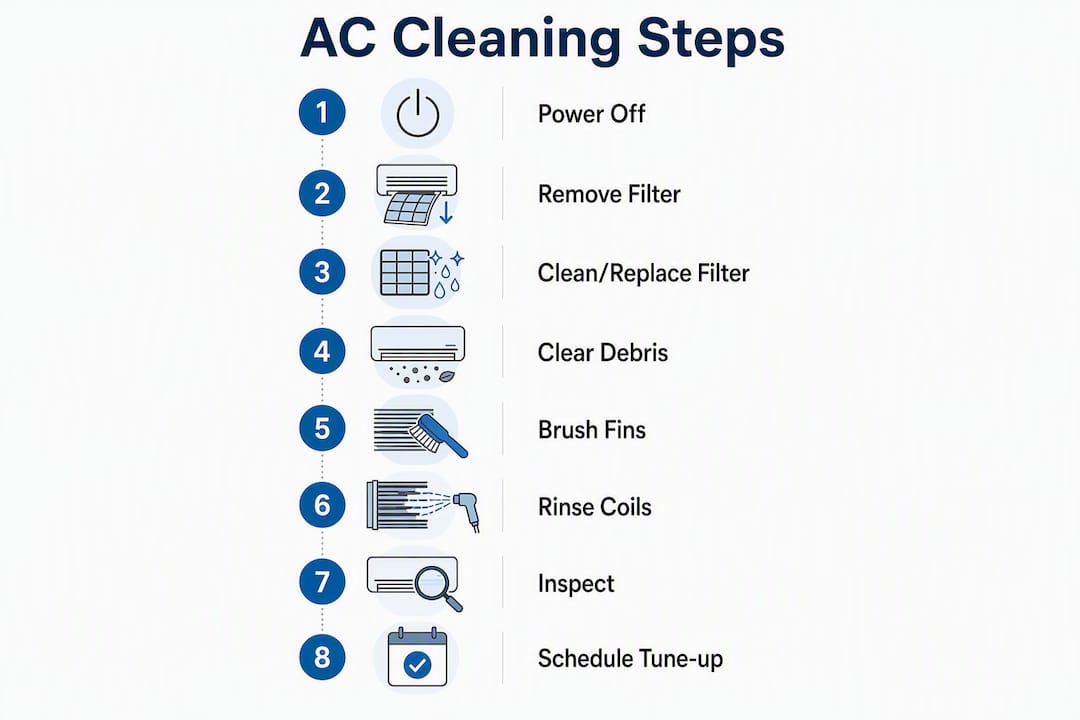
- Cut power at the breaker panel. Confirm the unit does not respond to the thermostat before proceeding.
- Remove the air filter. Hold it up to light. If you cannot see light through it, it needs replacing, not just vacuuming.
- Wash or replace the filter. Washable filters: rinse with cool water, let dry completely before reinstalling. Disposable filters: replace with the same MERV rating your system specifies.
- Vacuum the access panel and blower area. Use the brush attachment on your shop vacuum to remove dust from the blower housing and surrounding surfaces. Keep the nozzle away from wiring and capacitors.
- Clean the evaporator coil. Use a soft brush to loosen dust from the fins. If grime is heavy, apply a no-rinse coil cleaner according to the label. Do not rinse with water under pressure.
- Clear the condensate pan. Remove any standing water and wipe the pan clean. If you see slime or mould, flush the drain line.
- Flush the condensate drain line. Pour a cup of white vinegar into the drain access port. White vinegar prevents algae buildup without degrading plastic piping the way bleach can over time.
- Reinstall the filter and close the access panel before restoring power.
Stop and call a technician if you see ice on the evaporator coil, smell burning, or notice wiring that looks scorched or corroded. These are not cleaning problems.
Pro Tip: Homes with pets or allergy sufferers should change filters every 30–45 days. Low-occupancy homes without pets can often go 90–120 days. Check the filter monthly until you know your household's pattern, then set a reminder accordingly.

How to clean the outdoor condenser unit
You can safely clean the condenser yourself if you follow a few firm rules: power off, no pressure washer, gentle rinsing only.
Preparation:
- Shut off power at the breaker and at the outdoor disconnect box (the small box mounted near the unit).
- Clear away leaves, grass clippings, and any vegetation within 2–3 feet of the unit. Carrier recommends maintaining at least 2–3 feet of clearance on all sides to keep airflow unrestricted.
- Remove any debris resting on top of the unit by hand or with a soft brush.
Cleaning the fins and coils:
Use a soft-bristle brush to sweep the fins from top to bottom. Never brush sideways across the fins — that bends them. If fins are already bent, use a fin comb to straighten them before rinsing.

Rinse the coils with a standard garden hose, directing water from the inside of the unit outward when possible. This pushes debris out rather than deeper in. Keep the stream away from the fan motor and electrical components. Let the unit dry for 15–20 minutes before restoring power.
What not to do:
| Action | Why it causes damage |
|---|---|
| Pressure washer on coil fins | Flattens aluminium fins, permanently reducing heat transfer |
| Spraying fan motor directly | Water intrusion damages motor windings |
| Removing sealed panels without training | Risk of refrigerant exposure and electrical shock |
| Brushing fins sideways | Bends fins and restricts airflow |
Pro Tip: Positioning the condenser out of direct afternoon sun can improve efficiency by roughly 10 percent. If your unit sits in full sun, a shade structure on the south or west side (without blocking airflow) is a low-cost efficiency gain that works before any cleaning starts.
Safety, warranty, and manufacturer cautions in Canada
Basic cleaning is well within homeowner territory. Refrigerant work is not. In Canada, handling refrigerants requires certification under federal regulations, and attempting it yourself is both illegal and dangerous.
Keep these practices in mind to protect your warranty:
- Follow the manufacturer's maintenance schedule exactly as written in your owner's manual
- Keep records of every filter change, cleaning, and professional service visit
- Never open sealed refrigerant lines, tamper with the compressor, or attempt electrical repairs on the control board
- Use only cleaning products and replacement parts specified or approved by the manufacturer
- Schedule at least one annual professional inspection to maintain documented service history
Many manufacturers require professional maintenance as part of warranty terms. A DIY-only approach risks voiding coverage if a major failure occurs and service history is missing. Keep every receipt and service record in a dedicated folder for the life of the equipment.
Canadian homeowners should also be aware that Natural Resources Canada's Canada Greener Homes Initiative has supported energy-efficiency upgrades including HVAC improvements. Keeping your system well-maintained and documented supports eligibility for future programmes.
When should you stop DIY and call a licensed HVAC technician?
Some symptoms look like cleaning problems but are actually system failures. Cleaning a unit that has a refrigerant leak or a failing capacitor will not fix it, and may delay a repair until the damage is worse.
Call a technician immediately if you notice:
- Poor cooling even after filters are clean and coils are rinsed
- Ice forming on the evaporator coil or refrigerant lines
- Water pooling around the indoor unit beyond normal condensation
- Burning smell or electrical odour from any component
- Unusual sounds: grinding, banging, squealing, or persistent clicking
- Breakers tripping repeatedly when the AC runs
- The system short-cycling (turning on and off every few minutes)
Technicians check capacitors, condensate drains, and refrigerant levels during tune-ups because these items cause the majority of summer no-cool calls. A capacitor failure, for example, looks like a dead compressor until a technician measures it with a multimeter. That is not a homeowner task.
Pro Tip: If the system trips a breaker, do not simply reset it and restart. A tripped breaker is the electrical system protecting you from something. Turn the unit off and call a technician before running it again.
DIY vs. professional service: time and cost in Canada
| DIY cleaning | Professional tune-up | |
|---|---|---|
| Time required | 1–2 hours | 1–2 hours (technician on-site) |
| Supply cost | $20–$30 (tools + cleaner + filter) | Included in service fee |
| Service cost | — | $100 CAD typical range |
| What's covered | Filters, coil fins, condensate drain, debris | All DIY tasks plus refrigerant check, electrical inspection, capacitor test, safety controls |
The professional cost is worth it at least once a year, particularly for warranty compliance and diagnostics that require instruments. DIY cleaning between those visits keeps the system clean and reduces the chance of a mid-summer breakdown. Think of it as two complementary habits rather than an either/or choice.
Simple habits that keep your AC healthy between cleanings
Small, consistent actions prevent the kind of buildup that turns a one-hour cleaning into a half-day repair call.
- Check the filter monthly. Hold it to a light source. Replace it when light no longer passes through clearly.
- Keep outdoor clearance. After every windstorm or heavy rain, spend two minutes clearing leaves and debris from around the condenser.
- Monitor your energy bill. A sudden unexplained increase in cooling costs often means the system is working harder than it should.
- Listen during startup. A healthy AC starts smoothly. Grinding, rattling, or a delayed start are early warning signs.
- Glance at the condensate pan monthly. Standing water or a pink/black tinge signals algae growth before it becomes a clog.
- Flush the drain line with white vinegar every two to three months during cooling season.
Pro Tip: Set a recurring phone reminder for filter checks on the first of each month. Better yet, sign up for a filter subscription service that ships the right size on your schedule. Missed filter changes are the single most common cause of avoidable AC problems.
Is professional AC cleaning worth it?
Yes, for annual tune-ups, warranty compliance, and anything involving refrigerant or electrical diagnostics. A professional visit covers tasks that go well beyond what a garden hose and a soft brush can accomplish.
A qualified technician will typically:
- Inspect and tighten all electrical connections
- Test and measure capacitor values with a multimeter
- Check refrigerant charge and inspect for leaks
- Deep-clean evaporator and condenser coils with commercial-grade cleaners
- Test safety controls and thermostat calibration
- Clear and test the condensate drain system
- Document all findings for your warranty records
Cleanvents provides wall AC cleaning and air duct cleaning for residential clients in Laval and the surrounding Quebec region. Technicians follow industry standards, and the service includes documentation you can keep for manufacturer warranty purposes. For homeowners who want the annual professional visit handled properly, that is the practical next step after completing your own seasonal prep.
Key takeaways
Consistent AC maintenance comes down to one principle: clean what you can reach safely, and call a pro for everything else at least once a year.
| Point | Details |
|---|---|
| Power off first | Always cut power at the breaker before touching any indoor or outdoor component. |
| Filter frequency varies | Homes with pets or allergies need to change filters every 30–45 days; low-occupancy homes can go 90–120 days. |
| No pressure washers | High-pressure spray bends aluminium fins permanently; use a standard garden hose only. |
| Spring is the right time | Complete a full indoor and outdoor cleaning before the first heavy-use period of the year. |
| Cleanvents for annual service | Cleanvents handles wall AC and duct cleaning in Laval, with documented service for warranty compliance. |
The mistake most homeowners make
The most common error I see is skipping the filter for months, then pressure-washing the outdoor coils to "make up for it." Neither approach works. A neglected filter starves the system of airflow long before the coils get dirty enough to matter, and a pressure washer causes more damage in 30 seconds than a year of dust accumulation.
The better habit is boring but effective: check the filter every month, flush the condensate drain with vinegar twice a season, and book one professional visit in spring. That combination handles roughly 90 percent of what goes wrong with residential AC systems. The remaining 10 percent, refrigerant issues, capacitor failures, electrical faults, requires instruments and certification that no amount of DIY preparation substitutes for.
If you are unsure whether a symptom is a cleaning issue or a repair issue, the safest answer is to turn the system off and call a technician. A diagnostic visit costs far less than a compressor replacement.
Cleanvents handles the hard parts so you don't have to
Doing your own seasonal prep is smart. But the annual deep clean, refrigerant check, and electrical inspection are where professional service pays for itself, especially when your warranty depends on documented maintenance.

Cleanvents serves homeowners in Laval and the greater Quebec region with wall AC cleaning and full air duct cleaning services. Upfront pricing, experienced technicians, and a satisfaction guarantee mean no surprises on the day of service. Every visit is documented, so you have the service records your manufacturer requires. Ready to book your spring tune-up? Get in touch with Cleanvents and get it scheduled before the heat arrives.
Useful sources and further reading
The following resources informed this guide and are worth bookmarking for ongoing AC maintenance reference.
- Maintenance checklist | ENERGY STAR — Seasonal inspection checklist with guidance on scheduling professional service before peak cooling season.
- AC maintenance guide | Carrier — Practical tips on clearance, filter schedules, and what a professional tune-up should include; also addresses warranty implications.
- How to clean your home AC unit | Today's Homeowner — Includes the white vinegar condensate drain method and practical notes on coil cleaner use.
- How to clean an air conditioner | Lowe's — Covers fin comb use, pressure-washer warnings, and safe rinsing technique for outdoor units.